
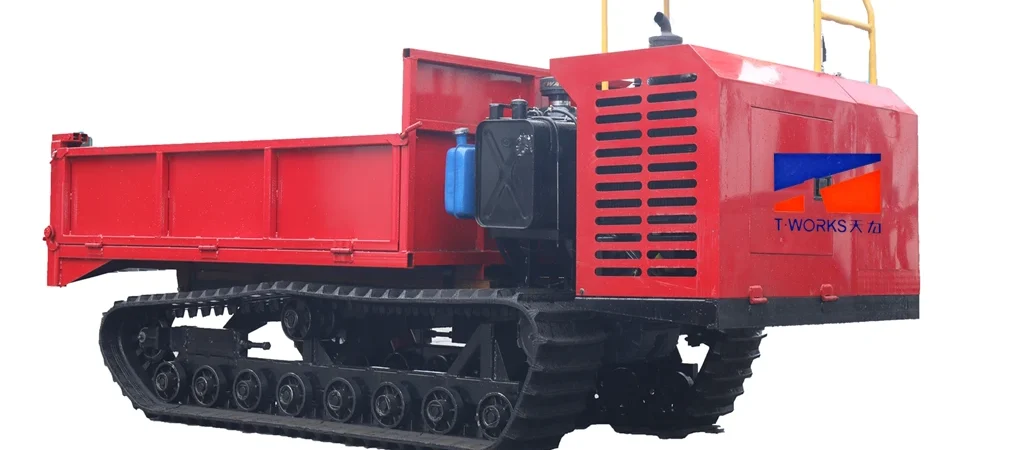
Anyone who has worked on a site with uneven ground, mud, or steep grades understands why wheeled vehicles often struggle to keep up with material transport demands. A crawler dumper truck solves this problem through track-based mobility combined with a tipping bed, giving operators a machine that can go where traditional dump trucks cannot. This article breaks down the main features, common uses, and practical benefits that make this equipment worth considering for businesses that regularly deal with challenging terrain or restricted site access.
Core Features That Define the Machine
The defining feature of this equipment is its rubber or steel track system, which spreads weight across a larger surface area than wheels. This reduces ground pressure and allows the machine to travel over soft soil, loose gravel, or muddy terrain without getting stuck. Paired with a hydraulic dump bed, it allows operators to load, transport, and unload materials with minimal manual effort. Many models also include adjustable speed settings, allowing operators to move slowly and carefully through tight spaces or ramp up speed on open ground for faster overall transport times across larger properties. Some designs also add protective guarding around the engine and hydraulic lines, helping the machine shrug off the kind of daily bumps and scrapes that are simply unavoidable on an active worksite.
Where These Machines Prove Most Useful
Construction sites are the most common environment for this equipment, but usage extends well beyond that. Landscaping crews use them to move soil and mulch across yards, farmers rely on them for hauling feed or harvested crops, and demolition teams use them to clear rubble from confined areas. Wherever ground conditions are unpredictable, tracked mobility offers a clear advantage over wheeled alternatives. Even municipal maintenance crews have started adopting these machines for tasks like park upkeep and storm cleanup, where access roads may be limited or nonexistent. Utility companies working in easements and right-of-way corridors have also found this equipment useful, since it can travel across grass and uneven ground without requiring the kind of temporary access roads that larger trucks would demand.
Stability on Slopes and Rough Terrain
One of the standout benefits of a well-built machine is stability. Lower center of gravity designs combined with wide track bases help prevent tipping, even when carrying a full load up or down an incline. This stability is particularly valuable on sites with variable elevation, where a wheeled machine might struggle for traction or risk losing balance. Operators working on hillside properties or excavation sites with steep grading often cite this stability as the single biggest reason they chose tracked equipment over a wheeled alternative. This confidence extends to how crews plan their workday, since routes across sloped terrain no longer need to be avoided or carefully engineered around the equipment’s limitations.
Reducing Labor and Increasing Speed
Before compact tracked dumpers became widely available, many small-scale hauling tasks relied on wheelbarrows and manual labor. A crawler dumper truck dramatically cuts down the time and physical effort required to move the same volume of material, freeing up workers for other tasks and shortening overall project timelines. This efficiency gain is one of the primary reasons crews continue to invest in this type of equipment, and many report recovering their initial investment within just a handful of larger projects.
Fuel Efficiency and Operating Costs
Compact size does not just help with maneuverability, it also tends to improve fuel economy compared to larger dump trucks. For businesses managing tight margins, lower daily operating costs combined with reduced labor needs can make a noticeable difference in overall project profitability, especially across multiple ongoing jobs. Some newer engine designs have further improved fuel consumption without sacrificing torque, giving buyers even more reason to consider upgrading from older equipment. Comparing the total cost of fuel over a full year of typical use often reveals savings that are easy to overlook when focusing only on the sticker price of the machine itself. Businesses running several machines across multiple active sites often find that these incremental fuel savings add up to a meaningful reduction in overall operating expenses by the end of a busy season.
Making the Right Investment Decision
Before purchasing, it is worth evaluating load capacity, engine type, and track width against the specific demands of your typical work. A machine that is well-matched to your terrain and material types will deliver far better long-term value than one chosen purely on price. Taking time to compare specifications across models helps ensure the equipment fits seamlessly into daily operations, and consulting with a knowledgeable supplier can help clarify which features matter most for your particular type of work. Businesses that treat this comparison process seriously, rather than rushing to the first available option, generally end up with equipment that serves them well for many years without unnecessary compromise.


