
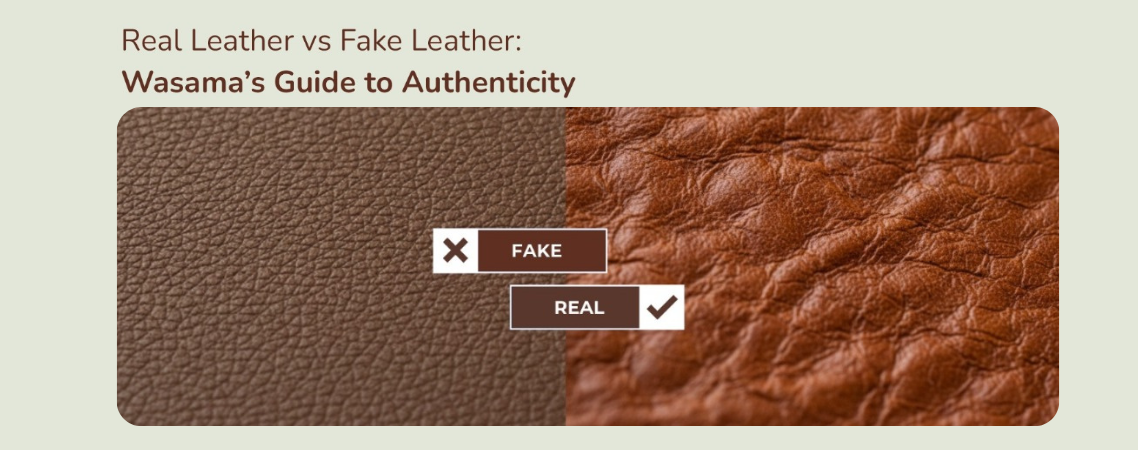
Walk into any UK high street shop or scroll through a marketplace like Amazon or ASOS, and you will encounter hundreds of products claiming to be leather. But way to differentiate real leather vs fake leather among them still remain a common confusion among shoppers to this day. Online and offline markets are filled with fake leather products to the extent that buyers often get misled and mistake faux synthetic leather products to be real leather bags and purses.
This guide gives you eight hands-on tests to tell real vs fake leather in any condition. It explains what real leather and fake leather actually mean and helps you decide which type is right for you.
What is Real Leather?
In real leather vs fake leather, real leather is natural material produced from animal hide, which is carefully processed through the tanning process to present natural leather products that stand beyond expected quality. Unlike fake or faux synthetic leather, which are often plastic-based, real leather has varied textures with natural imperfections, which make each piece look unique.
Real leather has different level of quality such as the highest one is full-grain leather which comes from the outermost layer of the hide and retains all of the original grain and natural markings making it most durable and breathable leather grade. However, top-grain leather has had the surface lightly sanded or buffed to remove imperfections, then often embossed with a uniform grain. And what we call the genuine leather is actually one of the lowest grades of real leather. It is made from the inner layers of the hide which is the parts left over after the top-grain and full-grain sections are removed. It is real leather, but it wears out much faster and will crack within a few years.
Wasama’s real leather bags and purses show individuality in the texture of the leather used, apart from elegance and durability through our genuine craftsmanship as we use full-grain grain in making our products.
What is Fake Leather?
Fake leather is artificial material representing a leather-like texture, such as vegan, PU, faux synthetic leather and others. They look like real leather at first glance, but their texture and uniformity analysis reveal their true origin.
Unlike real leather products, fake leather easily cracks or peels within a short time. It lacks breathability and natural texture, making it uniform in design. Wasama understands these differences of real leather vs fake leather and never compromises on creating products beyond quality and durability.
8 Ways to Tell Difference Between Real Leather vs Fake Leather
In the UK, by 2030, it is expected that the leather industry in the UK would reach US$17,431.4 million, with a CAGR (compound annual growth rate) of 7.4% from present to 2030. Real leather presently dominates fake or faux synthetic leather products in the UK. But there is an increased demand for fake leather driven by its eco-friendly nature and acting as a cruelty-free alternative.
The rising dominance of fake or faux synthetic leather would increasingly confuse people who still consider buying real leather. Wasama ensures to resolve this confusion by presenting 8 different ways you can tell real leather vs fake leather apart while buying any product.
| Feature | Real Leather | Fake / Faux Leather |
| Material | Natural animal hide (cow, goat, buffalo) | Synthetic (PU, PVC, microfibre, plant-based) |
| Texture | Uneven, natural pores and grain variations | Perfectly uniform; machine-printed grain |
| Edges | Rough, fibrous, suede-like | Smooth, clean-cut, plastic-coated |
| Smell | Earthy, organic, musky | Chemical, plasticky, or odourless |
| Touch | Soft, supple, warms to your skin | Cooler, stiffer, sometimes sticky |
| Water | Absorbs slightly; spot darkens temporarily | Beads up and rolls off |
| Ageing | Develops rich patina; improves over time | Cracks, peels, fades |
| Durability | Decades with proper care | 1–3 years typically |
| Breathability | Highly breathable (porous) | Non-breathable (sealed surface) |
| Biodegradable? | Yes | No (PU/PVC-based) |
1. Perform the Smell Test
To differentiate between real leather vs fake leather, smell the product. Real leather has a distinctive earthy, organic smell which is rich and slightly musky. It is the same aroma you notice in a quality leather car interior or an old saddle. This smell comes from the tanning process and the natural oils in the hide, and it cannot be convincingly replicated synthetically. Cheap fake leather has a plastic-like smell when it’s new. This is typically the fastest and most reliable single test available to differentiate real vs fake leather.
When you receive any of Wasama’s real leather bags, men’s or women’s leather products, perform the smell test. We assure each of our products has the aroma of natural leather, apart from its unique quality and labelling. We have a list of quality genuine leather products for men apart from women from where you can decide your next purchase to perform the smell test in analysing the genuineness of our products.
2. Feel the Texture
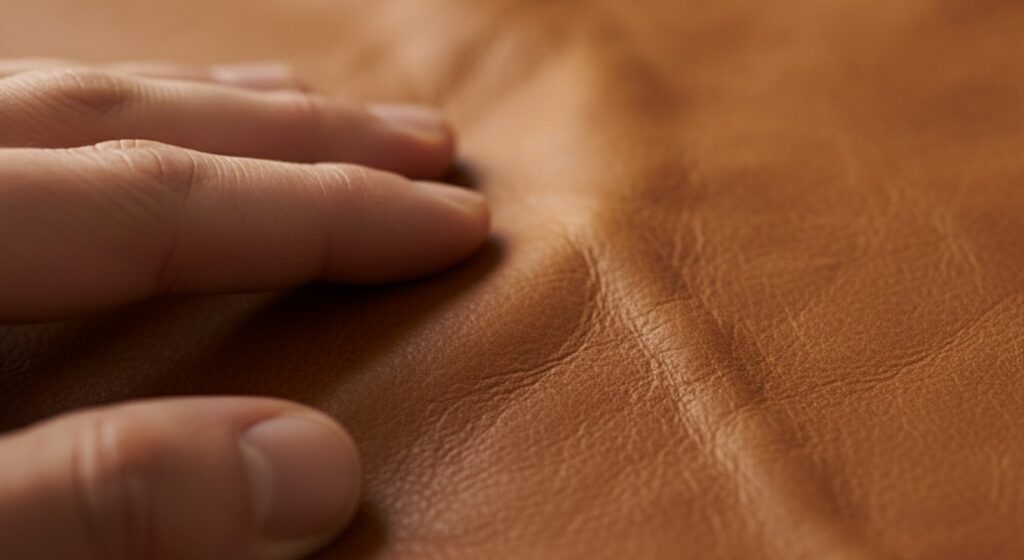
In the real leather vs fake leather debate, press your finger firmly into the surface. The real leather feels naturally soft with a supple and warm touch and wrinkle to crease around your fingertip, much like your own skin does. When you release pressure, it returns slowly. The surface also feels slightly warm because it responds to body heat. Regular use makes the leather more flexible and molds to your lifestyle.
Fake or faux synthetic leather, as an alternative to natural ones, depresses under pressure but springs back quickly without wrinkling. They do not adjust with use and time, but become more rigid and crack when bent. Wasama’s products, like leather wine bags, men’s wallets, luggage bags and other products has passed the texture and feel test.
3. Breathability
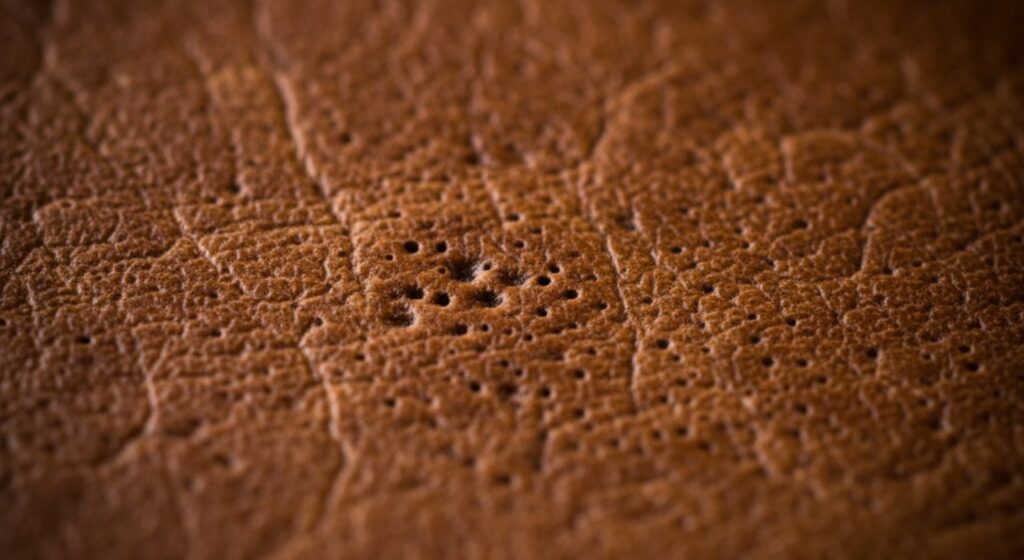
Natural leather is porous, which allows air to pass, leading to less moisture build-up and comfort. So pick up the item you want to know if its real leather or fake leather and hold it against your skin for 30 seconds. Real leather will feel comfortable and natural as it does not trap heat or moisture. That’s why wearing or carrying leather goods feels normal and comfortable in any environment. Othwerise, you can also do a simple visual check to differentiate fake vs real leather. Look at the surface under good light. Real leather has tiny, irregular pores like human skin. Faux leather has no pores which makes its surface completely sealed and uniform. In real leather vs fake leather, faux synthetic leather’s breathability is compromised due to plastic coating, which is non-porous in nature. They trap the heat and moisture, causing discomfort and unnatural odours in leather bags and purses made from fake products.
Wasama’s products are made from real leather, making them highly breathable as they use minimal surface coating with the vegetable tanning process to hold natural porosity. We also avoid any plastic laminates and finish with natural oils and conditioning that make our products remain breathable.
4. Edge Anaysis
The exposed side of the leather products is a major aspect to analyse while differentiating between real leather vs fake leather. Real leathers always have a rough and fibrous edge as they are extracted from natural hide. If you look closely, you will see that each of Wasama’s products has a rough edge with tiny fibres and unfinished texture being reflected. This is the clearest sign for identifying real leather bags, purses and others from us or any other brand.
Faux synthetic and fake leather have smooth and well-finished edges as they are machine-made, and the material does not fray. This makes them have a shiny and perfect finish, but lacks the authenticity of real craftsmanship.
5. Grain & Appearance
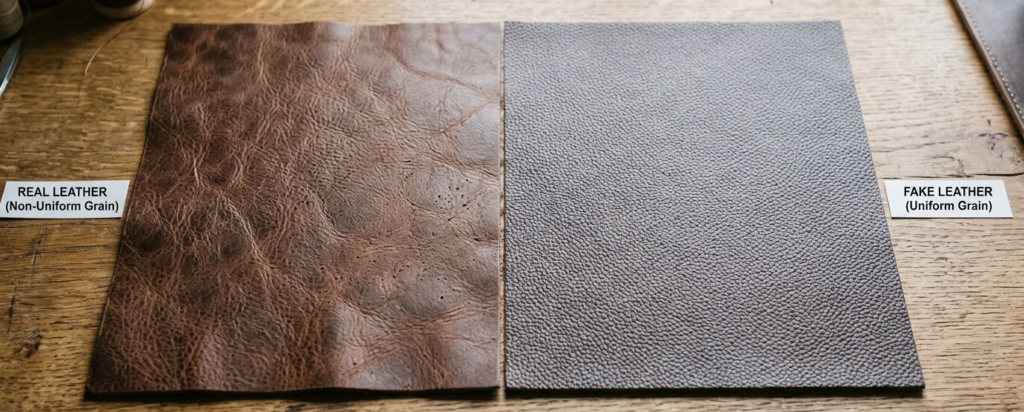
Look closely at the grain as it will help you to solve the real leather vs fake leather debate once and for all. The appearance of real leather is unique as it carries different natural pores, wrinkles and grain variations which differ with each animal and its hide. These subtle differences make the real leather bags, purses and other items never alike. Wasama’s real leather products reflect the same, where you can never find the same grain, wrinkle, pores or any pattern alike.
On the contrary, the fake or faux synthetic leather has a uniform surface with grains that are machine-printed to give a real look. However, the effect remains so consistent and without depth, you can easily find its fake condition.
6. The Water Test
A natural leather will always pass the water test, making it one of the elements to be focused on to differentiate real leather from fake leather. Natural leather is porous, making it easily absorb small amounts of water. The area which soaks up water is darkened temporarily due to the moisture effect. Wasama’s real leather bags and purse easily pass this test as the leather is porous and interacts naturally with moisture.
In contrast, fake leather is produced often from plastics and has a sealed surface, making water unable to pass through it. Thus, a water drop on faux synthetic or other fake leather rolls off instead of absorbing, indicating its low quality.
Note: Some real leathers are treated with waterproofing agents, which can slow absorption. If in doubt, combine this test with others.
7. Durability
Real leather is highly durable and can last for decades with proper care. These natural full-grain leather goods easily resist tearing and stretching, leading to less or no surface cracking. While comparing real leather vs fake leather on this aspect, Wasama stands out as each of our products is built with the idea of companionship in mind. We ensure our products remain with you for seasons to come and not just for a few days. You can log into our Amazon and Etsy pages to enjoy buying from us while experiencing the product’s durability during use.
Faux synthetic or other fake leather cannot promise this durability due to its rigid nature, which makes it prone to wear and tear with each use. Even light use cannot prevent scratching its rigid surface, which forces individuals to make frequent replacement of their bags and purses or other products.
8. Ageing
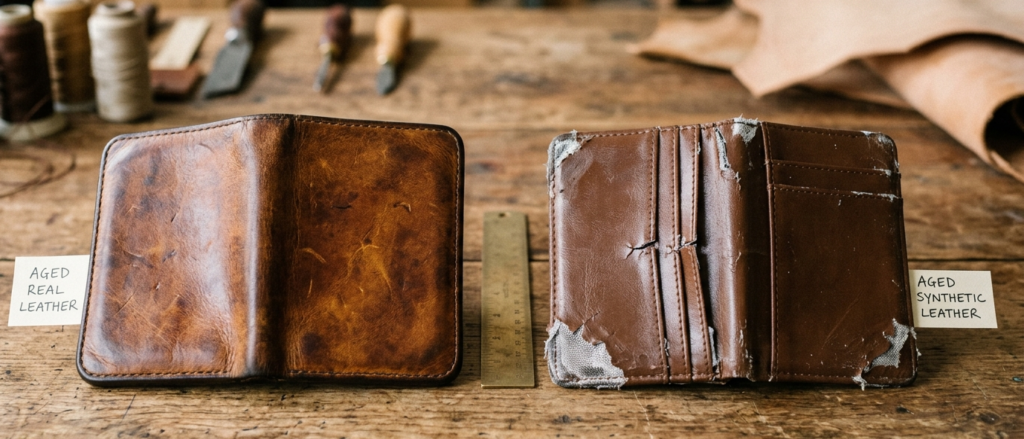
A major aspect of differentiating real leather vs fake leather is understanding the way their appearance and feel change with each use and time. The real leather products develop a patina with time that expresses sheen and richness while enhancing their beauty. The colour deepens, and the texture becomes prominent, which makes it more attractive to a few people who believe in elegance.
In fake leather, the colour fades away with each use, and the fabric becomes hardened. It also loses shine and becomes disposable without the ability to create a story of a lifetime. Thus, Wasama’s products, like real leather purses, bags, etc, are made to ensure they remain for a lifetime.
5 Reasons for Choosing Real Leather vs Fake/Faux Synthetic Leather
In comparing real leather vs fake leather, the selection of one over the other is not just dependent on its style but also on its impact on fashion. Your choice to look for real leather products instead of fake ones after understanding their value and way of detection is important. So, Wasama presents the five key reasons you should consider buying real leather bags, purses and others:
1. Environment Friendly
Real leather products are a by-product of the food industry and not a cruel approach for animals. Wasama’s real leather purses and bags, along with other products, are made from leather that goes into waste and may pollute the water after the hides are separated from animals in the food industry. Our products are also biodegradable, which ensures less harmful impact on the environment.
Faux synthetic leather is one of the different types of leather which is made from petroleum-based plastics and are non-biodegradable, which contributes to different pollution through shedding of microplastics into the environment. Not all fake leathers are non-biodegradable, as vegan leather made from plant materials are a pollution-free option. However, they fail to provide the elegance and quality that comes with real leather products.
2. Value for Money
Real leather purses or bags may seem expensive at first, but their timeless appeal with durability make it a good investment. Real leather products, such as those made by Wasama, develop character with each use and rarely need replacement over the years. However, fake leather, though it seems cost-effective, becomes useless within a few months and leads to the need for repetitive purchases.
3. Strong Aesthetics
As you identified differences in grain, texture, pattern and others while comparing real leather vs fake leather, you already understand how real leather products help you have an aesthetic appeal. Wasama’s leather products reflect this appeal compared to faux synthetic or fake leather which though it looks perfect at first but later loses its shine and texture with time.
4. Craftsmanship
Real leather products require skill and patience from the artisan to lead in creating timeless pieces. Wasama focuses on these aspects by ensuring their real leather products are never compromised on craftsmanship due to a machine production approach. Remember that fake leather is never hand-made and always machine-made, leaving less opportunity for artisans to show their skill and create a timeless piece of product.
5. Sustainable Lifestyle Choice
In comparing real leather vs fake leather to determine choice, always remember that natural leather is sustainable compared to any form of fake leather. Each natural leather product can be used multiple times without wear and tear, whereas fake leather compromises this action. Thus, if you choose fake leather, you need to continuously purchase products to maintain the lifestyle while contributing to landfill pollution from fast fashion.
3 Misconceptions about Real Leather and Fake Leather
In choosing real leather vs fake leather, consumers often fall prey to the myths that blur the line between fact and marketing. As a producer of real leather products, Wasama feels it’s time to clear these common misconceptions:
- Fake leather is eco-friendly: It is not necessarily true, as it contributes to plastic waste and real leather products, when sourced ethically, as executed by Wasama, ensure sustainable products are created.
- Real leather is expensive: Real leather from Wasama is not expensive but cost-effective compared to the promise of having the same products to be used for years without cracks or tears.
- All are the same: Real leather is different in texture, appearance, quality, outlook and others compared to fake leather, making each piece different from others.
Real Leather vs Faux/ Fake Leather: Which Is Right for You?
Choose real leather if:
- You want the item to last 10–20+ years
- You value something that improves in character and appearance with age
- You use the item daily and need durability under real-world conditions
- You are buying a classic style (bag, belt, wallet, boots) rather than a trend piece
- You want a biodegradable, longer-lasting alternative to plastic-based materials
Faux/ Fake leather may be a reasonable choice if:
- You want a trendy piece you expect to replace in 1–2 seasons
- You are strictly vegan and do not use any animal-derived products
- Your budget is tight and you understand the trade-off in longevity
- You need a specific colour or finish not available in real leather
Buying Leather Goods in the UK: What You Should Know
UK Consumer Law and Leather Labelling
UK Trading Standards guidance requires that leather products are accurately described. Sellers on platforms like Amazon, eBay, and Etsy operating in the UK are bound by the Consumer Rights Act 2015, which means a product falsely described as leather when it is synthetic constitutes a misrepresentation.
If you purchase a product described as leather and it turns out to be faux, you are entitled to a full refund. You can report misleading descriptions to Citizens Advice, which refers cases to Trading Standards.
UK Weather and Leather Performance
The UK’s damp, variable climate is worth factoring into your buying decision. Real leather handles moisture reasonably well with appropriate care — a quality bag or jacket treated with a beeswax or lanolin-based conditioner will cope well with light rain. Faux leather can become sticky or begin to delaminate in persistent damp conditions, particularly when temperature fluctuates between cold and warm.
Conclusion
The debate of real leather vs fake leather is clear now. Real or natural leathers are durable, beautiful and authentic compared to faux synthetic leather products. From the rich patina to increased porosity, real leather reflects sustainability with quality.
Selecting real leather bags and purses from Wasama ensures your investment is valued, as you are sharing your money for getting the best craftsmanship. So, those who value substance over money and wish for elegance, Wasama is your answer for real leather purchases.
Real Leather vs Fake Leather Guide from Wasama – FAQs
Which is better, fake leather or real leather?
Real leather vs fake leather shows a clear winner—real leather. It offers durability, comfort, and sustainability, while fake leather or faux synthetic leather cracks, peels, and needs frequent replacements.
How to know if leather is real or fake?
Check pores, edges, smell, and water absorption. Real leather bags and a real leather purse show natural grains, earthy aroma, and porous texture, unlike smooth, plastic-smelling fake leather.
Is 100% real leather real?
Yes, real leather means real hide processed through tanning. However, “100% genuine leather” often refers to mid-grade leather, not the highest quality like full-grain. Still, it outlasts faux synthetic leather.
Is real leather good quality?
Yes. Real leather is strong, breathable, and improves with age. A Wasama real leather bag or real leather purse retains elegance and value over time, unlike fake leather which quickly deteriorates.
How long do real leather bags last?
With care, real leather bags can last decades. They age gracefully, developing patina. Fake leather or faux synthetic leather usually lasts only 1-3 years before peeling and cracking.
Is fake leather waterproof?
Yes, fake leather resists water because of its plastic coating, but it traps heat and deteriorates quickly. Real leather absorbs small amounts of water naturally, showing authenticity in the real leather vs fake leather test.
Does real leather crack?
Properly cared-for real leather bags or a real leather purse do not crack. Cracking is common with fake leather or poorly maintained leather. Conditioning prevents dryness and keeps real leather supple.
Is faux synthetic leather eco-friendly?
No. Faux synthetic leather is made from plastics like PU/PVC, making it non-biodegradable. Responsibly sourced real leather is biodegradable and longer-lasting, reducing waste compared to disposable fake leather products.
Why is real leather expensive?
Real leather requires skilled craftsmanship and quality hide processing. A Wasama real leather bag is an investment piece, while fake leather is cheaper but needs constant replacement, making it costlier long-term.
Can real leather get wet?
Yes, real leather can get wet but dries naturally and regains strength. A water drop test helps identify real leather vs fake leather – real leather absorbs slightly, while fake leather repels water.


