
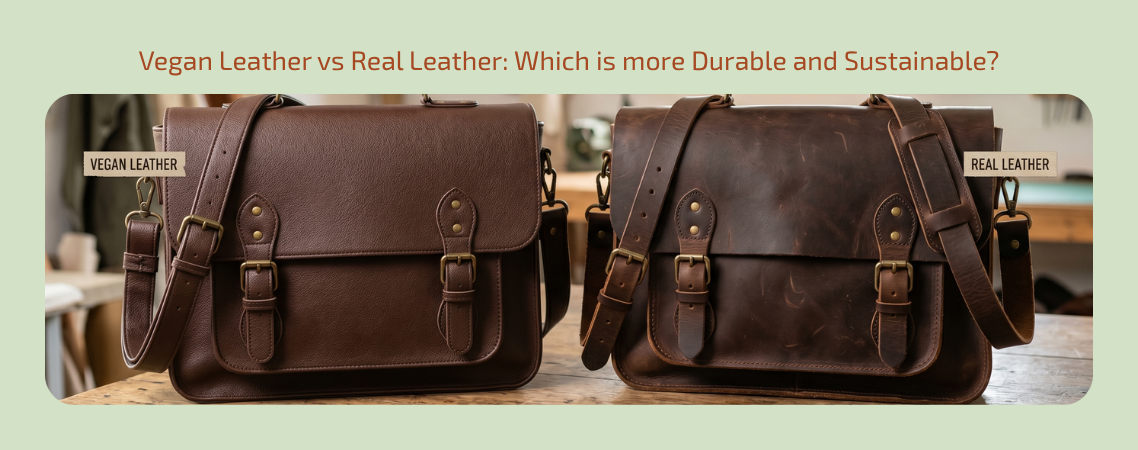
The choice between vegan leather and real leather is no longer just about style. It reflects your values, lifestyle, and your views on sustainability and quality. With the rise of conscious fashion, vegan leather has become a popular alternative, especially in categories like vegan leather bags UK, where ethical design meets modern aesthetics. At the same time, real leather and genuine leather continue to hold their ground for their durability and timeless appeal. Understanding how these materials differ, especially when asking if vegan leather is durable, can help you make a smarter, more informed purchase.
What is Vegan Leather?
Vegan leather is a modern alternative designed to replicate the look and feel of traditional materials without the use of animal hides. It is commonly produced using synthetic polymers such as polyurethane or polyvinyl chloride, although newer innovations now include plant-based sources like cork, apple waste, and mushroom fibres. At Wasama, vegan leather is crafted using synthetic polymers with the intent of supporting waste reduction and more responsible material use.
The appeal of vegan leather lies in its cruelty-free nature and its adaptability across styles, making it especially popular in categories like vegan leather bags UK where both design and ethics matter. Wasama has also introduced vegan leather canvas crossbody bags that combine functionality with a cleaner, more conscious material approach.
From a usability perspective, vegan leather offers versatility in finishes, colours, and textures, allowing brands to create products that closely resemble real leather. However, when evaluating performance, many consumers ask, is vegan leather durable enough for long-term use. The answer depends largely on the quality of the material. High-grade polyurethane-based vegan leather can provide decent resistance to wear, although it may not age in the same way as genuine leather.

What is Real Leather?
Real leather, often referred to as genuine leather, is a natural material derived from animal hides, most commonly cowhide. Through a detailed tanning process, the raw material is transformed into a durable and flexible product that has been valued for centuries. Wasama already offers products made from full-grain leather, representing the highest quality within real leather categories.
Unlike vegan leather, real leather carries natural grain variations, which contribute to its authenticity and premium feel. In terms of longevity, genuine leather is widely regarded as more durable, particularly when maintained correctly. It tends to resist tearing and can last for years, making it a long-term investment rather than a short-term purchase.
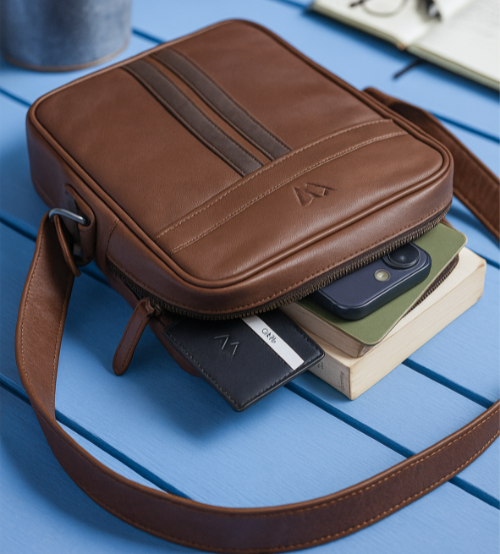
Vegan Leather vs Real Leather: The Ultimate Guide to Choosing the Best for You
Understanding the difference between vegan leather and real leather is essential before making a purchase. Each comes with its own advantages depending on how you plan to use it. A clear comparison will help you choose more confidently based on practicality rather than preference.
1. Material Composition and Origin
The core difference between vegan leather and real leather lies not just in what they are made of, but in how those materials behave over time and across use cases. Vegan leather is engineered, which means its consistency, finish, and performance can be controlled during production. This allows brands to create uniform textures and lighter products, especially in categories like vegan leather bags UK.
Real leather, in contrast, is a natural material, which means no two pieces are identical. This natural variation contributes to its premium appeal but also means performance can vary slightly depending on the hide quality. Full-grain genuine leather, such as that used by Wasama, retains the strongest part of the hide, which directly enhances durability and strength.
From a practical standpoint, vegan leather offers controlled consistency, while real leather offers natural strength and authenticity.
2. Durability and Longevity
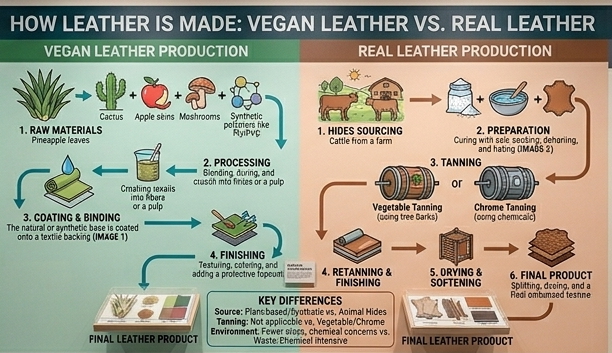
When comparing durability, the key difference lies in how each material handles stress, friction, and time. Vegan leather is usually layered, with a plastic-based coating on top of a fabric backing. This structure works well for light to moderate use, but under regular friction such as daily carrying, folding, or exposure to heat, the top layer can begin to weaken. This is when issues like peeling, surface cracking, or stiffness start to appear. On average, most vegan leather products perform well for a few years, depending on usage and quality.
Real leather, especially full-grain genuine leather, has a dense fibre structure that runs throughout the material, not just on the surface. This allows it to handle weight, bending, and repeated use without breaking down in layers. Instead of peeling, it may develop minor marks that blend into the material over time. With proper care, real leather products can last significantly longer, often many years, without losing their structural strength.
3. Environmental Impact and Sustainability
Sustainability in vegan leather vs real leather is not a straightforward comparison because both materials solve one problem while creating another.
With vegan leather, the biggest advantage is clear. It removes animal dependency entirely. This makes it an easy ethical choice for many buyers, especially in categories like vegan leather bags UK, where conscious consumption is increasing. At the same time, most vegan leather in the market today is still produced using PU or PVC. These materials rely on chemical processing and are not easily biodegradable, which shifts the concern from animal welfare to long-term waste management. This is where the question of whether vegan leather is durable becomes important, because shorter lifespan products can increase environmental load through repeated replacements.
Real leather takes a completely different position in this debate. It is natural, biodegradable under the right conditions, and structurally long-lasting. However, its environmental impact begins much earlier in the chain, primarily from livestock farming, which requires significant water, land, and energy resources. Unlike vegan leather, the concern here is not disposal but production.
The real distinction lies in lifecycle thinking. Vegan leather reduces ethical concerns at the source but may raise concerns at disposal. Real leather, including genuine leather, carries a heavier production footprint but often compensates through longevity and reduced replacement frequency. So, the better option is not universal. It depends on whether your priority is ethical sourcing, material lifespan, or overall environmental footprint across the product’s life.
4. Cost and Value Over Time
If you look at your wardrobe or accessories over the last few years, the real cost is not what you paid once, but how many times you replaced something similar.
With vegan leather, the lower price makes it easy to buy without overthinking. You can switch styles, follow trends, and not feel locked into one product. This is why categories like vegan leather bags UK grow fast, because the entry barrier is low. When the material begins to show signs of wear over time, most users tend to replace the product instead of repairing it. This is largely because repair options are limited and often not cost-effective, which gradually turns affordability into a repeated spending cycle.
With real leather, the buying decision usually feels heavier at the start. But the behaviour after purchase is completely different. People tend to use the same product for years, take care of it, and rarely feel the need to replace it. This is especially true for genuine leather, where ageing actually improves the look instead of reducing usability.
So the difference is not just price. Vegan leather supports frequent change. Real leather supports long-term use. The better choice depends on whether you prefer variety over time or stability in what you own.
5. Maintenance and Care
How a material fits into your routine often matters more than how it performs in theory. Vegan leather is designed for ease, which is why it works well for everyday users who prefer minimal upkeep. It can be cleaned quickly with a damp cloth, does not require conditioning, and generally holds its appearance without much effort. This convenience is one of the reasons why vegan leather bags UK are widely preferred for daily use.
At the same time, ease of maintenance also reflects the material’s structure. Since vegan leather has a coated surface, care is limited to surface-level cleaning, and once damage begins, repair is rarely practical. This again links back to the question, is vegan leather durable, because lower maintenance often comes with limited long-term recovery options.
Real leather, including genuine leather, demands more attention but offers more in return. Regular conditioning helps maintain flexibility, prevents drying, and protects against cracks. While this may seem like additional effort, it allows the material to retain strength and improve visually over time. In practical terms, vegan leather is easier to manage, while real leather responds better to consistent care and rewards it with longevity.
6. Appearance and Aesthetic Appeal
The visual difference between vegan leather and real leather becomes clearer the longer a product is used. Vegan leather offers a controlled and consistent finish, which makes it ideal for modern, trend-driven designs. It can be produced in a wide range of colours, textures, and patterns that remain uniform across products. This is why brands often use it for contemporary styles, such as Wasama’s vegan leather canvas crossbody bags, where design flexibility plays a key role. However, consistency also means predictability. The look of vegan leather remains largely the same over time, with limited variation as it ages.
Real leather, on the other hand, is valued for its natural variation. Each piece of genuine leather carries unique grain patterns, slight imperfections, and tonal differences that cannot be replicated artificially. As it is used, it develops a patina, which deepens the colour and enhances its overall character. This makes real leather visually dynamic rather than static.
So while vegan leather delivers design versatility, real leather delivers depth and individuality that evolves with use.
7. Ethical Considerations
Ethics is often the starting point for many buyers when comparing vegan leather vs real leather. Vegan leather removes animal use entirely, which makes it an immediate choice for those who prioritise cruelty-free products. This shift is especially visible in markets like vegan leather bags UK, where consumer awareness around ethical fashion continues to grow.
At the same time, ethical evaluation does not end at sourcing. Since most vegan leather is still made using synthetic materials, concerns around chemical processing and long-term waste also become part of the discussion. This adds another layer to the question: Is vegan leather durable, because a shorter product life can indirectly impact sustainability.
Real leather presents a different ethical perspective. While it involves animal-derived material, it is often considered a by-product of the meat industry. Supporters argue that using genuine leather in a responsible way helps reduce material waste. Critics, however, focus on the broader environmental and ethical concerns linked to livestock farming.
Ultimately, the ethical decision between vegan leather and real leather depends on what aspect matters more to the individual, whether it is animal welfare, environmental impact, or long-term consumption.
8. Practical Use Cases
The choice between vegan leather and real leather becomes much clearer when you consider how and where the product will be used.
Vegan leather works best in situations where style, lightness, and flexibility are priorities. It suits fashion-forward products, occasional-use items, and categories where variety matters more than lifespan. This is why vegan leather bags UK are commonly chosen for casual use, travel-friendly designs, and seasonal trends.
However, when the requirement shifts towards strength and long-term reliability, real leather becomes more practical. Products made from genuine leather perform better under continuous use, especially when carrying weight or being exposed to regular handling. Items such as wallets, belts, and travel accessories benefit from this durability because they are used frequently and need to maintain their structure.
In simple terms, vegan leather fits short to medium-term, design-led usage, while real leather fits long-term, performance-driven use where durability is non-negotiable.
Comparison Table: Vegan Leather vs Real Leather
| Factor | Vegan Leather | Real Leather |
| Material Type | Made using synthetic polymers or plant-based alternatives | Made from animal hides, commonly cowhide |
| Durability | Suitable for short to medium-term use; may peel or crack over time | Highly durable; maintains structure and lasts for years |
| Longevity | Typically requires replacement after a few years depending on use | Long-term use; often improves with age |
| Maintenance | Easy to clean; no conditioning required | Requires conditioning and care to maintain quality |
| Repairability | Difficult to repair once damaged | Can be restored, polished, and repaired |
| Appearance Over Time | Remains mostly the same or degrades with wear | Develops patina and improves visually over time |
| Design Flexibility | High; available in multiple colours, textures, and finishes | Limited to natural textures and tones |
| Ethical Aspect | Cruelty-free; no animal involvement | Involves animal-derived material |
| Environmental Impact | Lower animal impact but may involve non-biodegradable materials | Natural and biodegradable but resource-intensive production |
| Cost (Initial) | Affordable and budget-friendly | Higher upfront investment |
| Cost (Long-Term) | May increase due to frequent replacement | More cost-effective over time due to durability |
| Best Use Case | Fashion, casual use, trend-based products like vegan leather bags UK | Long-term products like wallets, belts, and premium bags made from genuine leather |
Conclusion
Choosing between vegan leather and real leather ultimately comes down to how you intend to use the product and what you value more over time. If your priority is affordability, low maintenance, and ethical sourcing, vegan leather offers a practical and accessible solution, especially in categories like vegan leather bags UK where style and flexibility matter. However, it is important to consider is vegan leather durable enough for your usage, particularly if you are looking for long-term reliability.
On the other hand, real leather, particularly genuine leather, stands out for its durability, strength, and ability to age gracefully. While it requires more care and a higher initial investment, it often delivers better value over time through extended use and repairability.
A well-informed decision is not about choosing one as universally better, but about selecting the material that aligns with your lifestyle, expectations, and long-term usage needs.
Vegan Leather vs Real Leather – FAQs
1. Is vegan leather durable for daily use?
Yes, vegan leather is durable for light to moderate daily use, especially high-quality PU-based options, but it may not last as long as real leather under heavy or long-term use.
2. What is the difference between vegan leather and real leather?
Vegan leather is synthetic or plant-based and cruelty-free, while real leather is made from animal hides and offers higher durability, natural texture, and long-term performance.
3. Is vegan leather better than genuine leather?
Vegan leather is better for ethical and affordability reasons, while genuine leather is better for durability, longevity, and premium feel. The choice depends on your priorities and usage.
4. Do vegan leather bags last long?
Vegan leather bags UK can last a few years with proper care, but they may show wear like peeling over time, unlike real leather which typically lasts much longer.
5. Does real leather last longer than vegan leather?
Yes, real leather, especially genuine leather, lasts significantly longer due to its strong fibre structure and ability to withstand wear, making it a better long-term investment.
6. Is vegan leather environmentally friendly?
Vegan leather is cruelty-free and reduces animal impact, but synthetic versions may involve chemicals and are not biodegradable, unlike real leather which is natural but resource-intensive.
7. Can vegan leather crack or peel?
Yes, vegan leather can crack or peel over time, especially with frequent use or heat exposure, as its surface layer may weaken, unlike real leather which ages differently.
8. Is real leather worth the higher price?
Real leather is worth the investment if you prioritise durability, long-term use, and repairability, as genuine leather products often last years without needing replacement.
9. Which is easier to maintain, vegan leather or real leather?
Vegan leather is easier to maintain as it requires simple cleaning, while real leather needs conditioning and care to preserve its quality and extend its lifespan.
10. Are vegan leather bags popular in the UK?
Yes, vegan leather bags UK are increasingly popular due to rising demand for ethical, affordable, and stylish alternatives to real leather products.


