
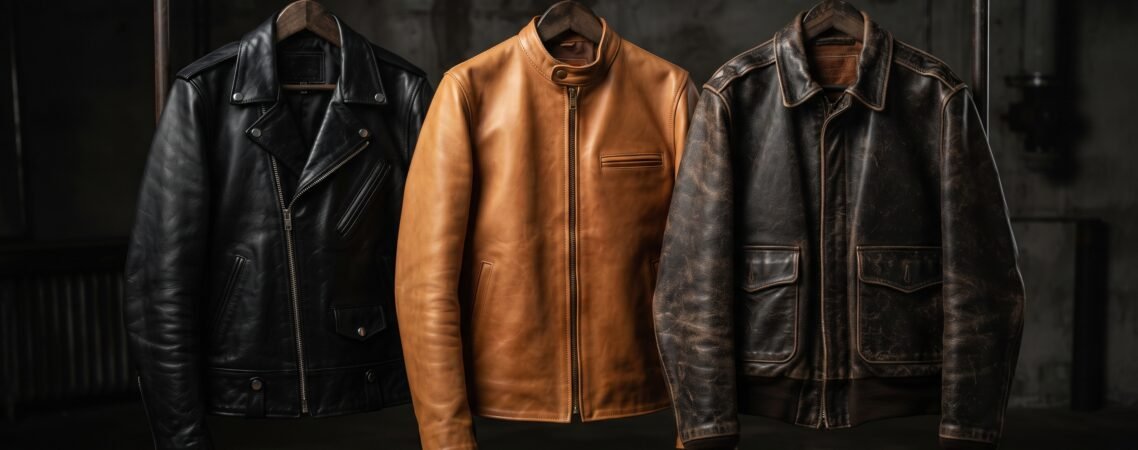
If you have ever bought a leather jacket that looked amazing in month one and started cracking by month six, you already know that not every jacket is built the same. Some jackets survive rain, cold winters, and years of daily wear. Others peel the moment they meet real weather. Before you spend your money, it helps to understand the types of leather jackets available and how each one holds up over time, since durability depends almost entirely on the leather type and the tanning process used.
A well made tan leather jacket made from full grain leather can outlast a cheaper jacket by decades, while a bonded or coated leather piece may not survive a single tough winter. This guide breaks down the most durable leather jacket types, ranked from strongest to weakest, based on how the leather is tanned, treated, and stitched together.
Why Durability Depends on More Than Just the Word Leather
A lot of buyers assume that if a tag says leather, the jacket will last for years. That is not true. Durability comes down to three things, and missing even one shortens the life of the jacket significantly.
- How much of the natural hide grain was kept during tanning
- Which tanning method was used, chrome, vegetable, or a mix of both
- How the panels were stitched, lined, and finished before sale
Once you understand these three factors, ranking leather jacket types gets a lot easier, and you stop paying for marketing terms that sound premium but mean very little.
The Most Durable Leather Jacket Types, Ranked
1. Full Grain Leather Jackets
Full grain leather uses the entire top layer of the hide, including the natural grain and imperfections. Nothing is sanded away, which means the fibers stay tightly packed and strong.
- Lifespan: 20 to 30 years or longer with basic care
- Best for: Riders, daily wearers, and anyone who wants the jacket to age instead of wear out
- Weak point: Higher price and a longer break in period
This is the leather type most experienced buyers look for first, and it is also the standard used across most of the durable jackets you will find at Leather Jacket Black.
2. Top Grain Leather Jackets
Top grain leather has the very top layer sanded down and refinished, which removes scars and blemishes but also removes a thin layer of natural fiber strength.
- Lifespan: 10 to 15 years with regular wear
- Best for: Buyers who want a smoother, more uniform look without a high price tag
- Weak point: Slightly less resistant to scuffing compared to full grain
3. Vegetable Tanned Leather Jackets
Vegetable tanning uses natural tree bark and plant extracts instead of chemicals. It is a slower process, but it produces leather that ages beautifully and develops a rich patina over time.
- Lifespan: 15 to 25 years, often improving in look with age
- Best for: Buyers who want an eco conscious option with a classic vintage finish
- Weak point: More sensitive to water if left untreated
This is also the tanning method behind most of the tan leather jacket styles that customers ask us about most often, since the tanning process itself is what creates that warm tan color and long lasting strength.
4. Distressed Leather Jackets
Distressed leather starts as full grain or top grain leather that is treated to look worn in from day one. The pre distressing does not weaken the hide, it is mostly a surface finish.
- Lifespan: 15 to 20 years
- Best for: Buyers who want a rugged look without waiting years for natural wear marks
- Weak point: Harder to spot new damage since the jacket already looks worn
5. Aviator and Shearling Lined Leather Jackets
Aviator jackets are usually made from thick, heavy duty leather designed to handle extreme cold. The lining adds warmth, but it is the outer hide that determines how long the jacket survives.
- Lifespan: 15 to 20 years for the shell, lining may need attention sooner
- Best for: Cold climate wearers who need insulation along with a tough exterior
- Weak point: Heavier weight, not ideal for warmer regions
6. Cowhide Leather Jackets
Cowhide is one of the thickest and toughest leathers used in outerwear, which makes it a favorite for motorcycle and biker jackets that need to survive abrasion.
- Lifespan: 20 plus years, extremely resistant to tearing
- Best for: Riders and anyone needing serious abrasion resistance
- Weak point: Heavier and stiffer until fully broken in
7. Genuine Leather Jackets
Genuine leather sits lower on the durability scale despite the name sounding premium. It is made from leftover layers of the hide bonded or pressed together, so the fibers are weaker.
- Lifespan: 3 to 5 years on average
- Best for: Budget shoppers who do not need decades of use
- Weak point: Cracks and peels faster, especially in cold or dry weather
8. Bonded and Faux Leather Jackets
These are made from scrap leather fibers or synthetic coatings pressed onto a fabric base. They look decent in photos but do not hold up under real wear.
- Lifespan: 1 to 3 years before visible peeling
- Best for: Occasional wear, costume use, or short term budget needs
- Weak point: Peels, cracks, and does not age gracefully
Durability Ranking At a Glance
- Full grain leather, most durable, ages for decades
- Cowhide leather, extremely tough, built for abrasion
- Vegetable tanned leather, long lasting with a natural patina
- Top grain leather, solid mid range durability
- Distressed leather, durable with a pre worn finish
- Aviator or shearling lined leather, strong shell, heavier build
- Genuine leather, budget friendly but shorter lifespan
- Bonded or faux leather, least durable, shortest lifespan
How to Make Any Leather Jacket Last Longer
Even the most durable jacket needs basic care. These habits add years to any jacket, regardless of the leather type.
- Condition the leather every 3 to 6 months to stop it from drying out
- Store the jacket on a wide hanger, never folded for long periods
- Keep it away from direct heat sources like radiators or car dashboards
- Let it air dry naturally if it gets wet, never use a hair dryer
- Clean spills immediately with a soft, slightly damp cloth
A Quick Word on Tan Leather Jackets
A tan leather jacket tends to show wear differently compared to black leather, since lighter tones make scuffing and dryness more visible early on. The good news is that tan leather, when it comes from full grain or vegetable tanned hides, actually ages into a deeper, richer shade over time instead of looking worn out. This is one reason tan colored jackets have stayed popular for decades among buyers who want their jacket to look better each year, not worse.
Frequently Asked Questions
Which type of leather jacket lasts the longest?
Full grain leather jackets last the longest, often 20 to 30 years, because the natural grain layer is left completely intact during tanning.
Is a tan leather jacket less durable than a black one?
No, color does not affect durability. A tan leather jacket made from full grain or vegetable tanned leather is just as strong as a black one, it simply shows dirt and scuffing more visibly since the tone is lighter.
What is the weakest type of leather jacket?
Bonded and faux leather jackets are the weakest. They are made from pressed fibers or synthetic coatings and usually start peeling within one to three years.
Does genuine leather mean high quality?
Not necessarily. Genuine leather is actually one of the lower grades of real leather, sitting below full grain and top grain in both quality and lifespan.
How can I tell if a jacket is full grain before buying?
Full grain leather usually shows natural texture, small imperfections, and slight variation across the hide. It also has a distinct, rich smell compared to processed leather.


