

Different types of leather materials have varied beauty and strength, which define the way they are to be used in crafting products. Yet most people lack knowledge regarding the best types of genuine leathers to look for while selecting different goods, such as shoes, wallets, jackets, etc.
Leather is not a single material but is a spectrum. At one end sits full-grain hide, capable of lasting decades and growing more beautiful with every year of use. At the other sits bonded ‘leather’, which may begin to peel and crack within months. The difference in longevity between the two can be 40 years or more, yet both are legally sold as leather.
Each type of leather is shaped by its grain, tanning method and finish to become suitable for creating the best products. At Wasama, we believe understanding different types of leather, extending from full-grain leather to any other genuine types of leather, is essential in making the perfect choice of products during purchase. Thus, this guide is developed to help you understand the different types of leather present and ways to recognise them to determine the best ones.
Overview of the Basics of Understanding Different Types of Leather
The UK people to determine the variations in different types of leather need to understand the foundational structure and process to create leather to build products. All pieces of leather originate from the animal hide, which, with different processing, get their strength, appearance, texture and value.
1. Hide and Its Layers
The outermost part is the hide, which contains the natural grain patterns with pores and fibres that make every piece unique in nature. Products made from this layer, such as full-grain leather wallets or bags or belts, are seen to last decades and develop rich patina with longer use.
Hide follows the lower split layers, which are the inner part of the hide that is weaker and less dense. In different types of leather, this is sanded, embossed or coated to show the appearance of high-quality leather. These layers are often used in low-cost goods labelled as genuine leather.
2. Processing
In creating different types of leather in the UK, the hide is treated through the process of shaving, sanding, buffing and coating. These actions alter the grain surface and influence its characteristics and quality. The removal or changing of top grain influences the strength of the different types of leather, as reduced fibre density makes the leather less durable. The coating process influences the breathability of the leather by determining how much air is trapped, as reduced air lowers the flexibility of the leather material.
The processing influences the patina on different types of leather as it decides the way the finished material would age while maintaining all the surface grains. In general, full-grain leather and aniline leathers often age gracefully due to their sophisticated process, while synthetic-coated leather develops poor flexibility and grain, leading it to have poor patina.
3. Tanning and Finishing
After splitting the hide, the raw leather needs to be tanned and finished to prevent decay and define the texture as well as colour. Vegetable tanning uses natural extracts in tanning leather, which helps it age beautifully, while chrome tanning uses chemicals, which makes the leather soft, flexible and vibrant in colour. A combination of both creates the best type of genuine leather required for making quality leather products.
10 Different Types of Leather Commonly Used in the Leather Goods Industry
Not all leather is created equal, and the difference between grades is not cosmetic as it is structural. The different type of leather used in a product determines how long it will last, how it will age, and whether it represents genuine value for money. These 11 different types of leather in the UK are ordered from highest to lowest quality, so you can quickly orientate yourself before diving into the detail.
| Leather Type | Durability | Develops Patina | Feel | Best For | Price Tier |
|
Full-Grain |
★★★★★ | Yes — beautifully | Natural, breathable | Wallets, bags, belts | Premium |
|
Top-Grain |
★★★★☆ | Partially | Smooth, uniform | Luxury handbags, shoes | Mid–High |
|
Nubuck |
★★★★☆ | Subtly | Velvety, soft | Footwear, outerwear |
Mid–High |
|
Aniline |
★★★★★ | Yes — richly | Soft, natural | Designer bags, interiors |
Premium |
|
Semi-Aniline |
★★★★☆ | Yes | Smooth, slight sheen | Luxury goods | Mid–High |
| Suede | ★★★☆☆ | Minimal | Soft, fuzzy | Fashion footwear, jackets |
Mid |
|
Split (Genuine) |
★★☆☆☆ | No | Coated, stiff | Budget accessories | Budget |
|
Bonded |
★☆☆☆☆ | No | Plastic-like | Furniture, book covers |
Budget |
| Patent | ★★★☆☆ | No | Glossy, lacquered | Formal shoes, clutches |
Mid |
| Latigo | ★★★★★ | Minimally | Firm, waxy | Straps, harnesses, outdoor |
Mid–High |
| Bicast | ★★☆☆☆ | No | Stiff, synthetic | Decorative, low-cost goods |
Budget |
1. Full Grain Leather
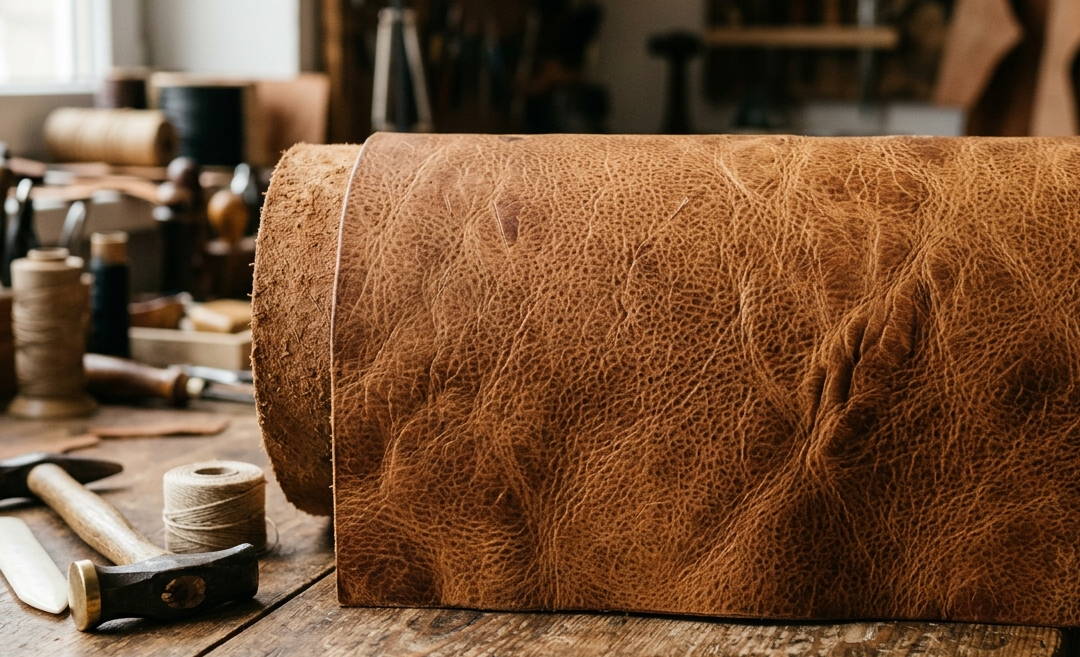
One of the best types of real leather is the full-grain leather, which retains most of the complete-grain layer from the hide without being affected by imperfections. This type of leather is not sanded or buffed, or corrected, which makes it show natural scars, textures, pores and others that offer a natural look. The retention of the grain ensures this type of leather shows increased durability and strength, along with rich patina with time. With proper care, a full-grain leather wallet or belt can last 20–50 years. Full-grain leather also develops a rich patina which is a natural deepening of colour and sheen that accumulates with handling and age and it is a feature, not a flaw.
Common uses: The strength and beauty of the full grain leather make it mostly used in creating heritage bags, classic belts, luxury footwear and handcrafted accessories. Wasama uses full-grain leather in creating messenger bags, genuine leather card holders, leather purses and others. However, we have maintained cost-effectiveness in ensuring that full-grain quality leather products can be used by all.
How to identify Full-grain leather from other different types of leather in the UK?
Natural variation in the surface making no two pieces identical. You may see subtle marks or texture differences. The leather breathes; it will feel warm and slightly porous to the touch.
2. Top-Grain Leather
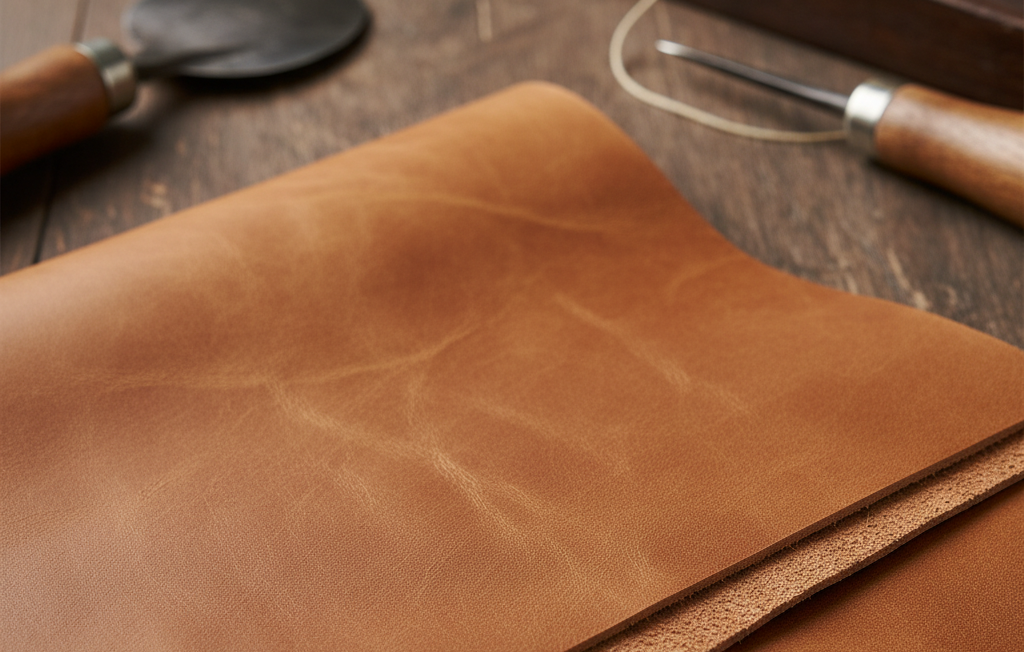
The top-grain leather is one of the different types of leather widely used in creating modern crafts and luxury goods. This is retrieved from the top hide of the animal and undergoes sanding or buffing to create a uniform and polished appearance. It helps in removing the natural imperfections which cannot be removed from full-grain leather and has a protective finish to provide a consistent and sleek texture. The sanding removes the topmost fibres which also reduces the leather’s strength slightly, but the result remains highly durable by everyday standards compared to other different types of leather. It develops some patina, but the surface coating limits how deeply the leather can absorb natural oils over time.
Common uses: Top-grain leather is often used in creating modern luxury goods where the key demand is quality with refined aesthetics. Among the different types of leather, this type of real leather is used for creating high-quality shoes, handbags and home furniture. Wasama avoids using this type of leather as we try to provide a natural finish to products while maintaining durability and breathability.
How to identify Top-grain leather from other different types of leather in the UK?
Uniformly smooth surface with no natural marks. Feels slightly cooler and more consistent than full-grain.
3. Split Leather
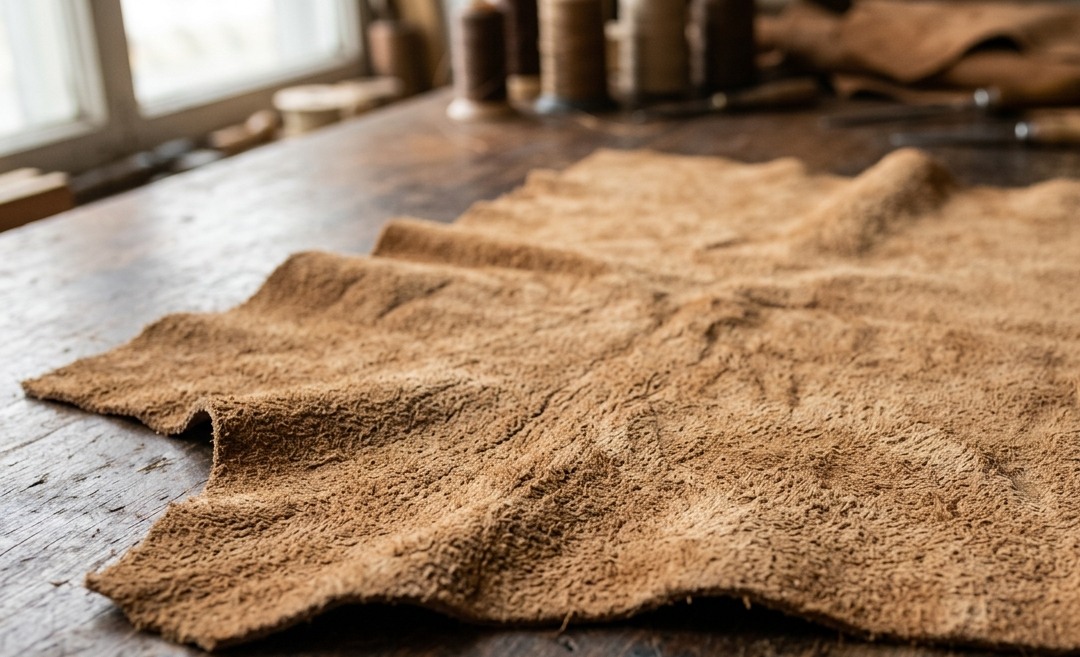
As everyone understands, genuine leather indicates premium quality leather, which is best in the market. However, genuine leather is mainly split leather, which is not of premium quality and is made from the lower layers of the animal hide after the top-grain is removed. This lacks the dense colour and tight fibres found on the top layer, which makes split leather soft and less durable. In making different types of leather, split leather is created by adding a coat of paint and embossing on the surface of the leather to mimic the texture of top-grain leather.
Common use:
Split leather is used in creating low-cost accessories, goods and others which need increased visual appeal compared to endurance. Many of the products indicated as genuine leather are not top-grain leather and are considered to be made from this type of leather. At Wasama, we avoid using split leather for creating any of our products, as it would lead to lower quality of our products.
How to identify Split leather from different types of leather in the UK?
Uniform, slightly plastic-looking surface. Texture feels embossed rather than natural. May lack the characteristic leather smell.
Note: When a product is stamped ‘genuine leather’, it is almost always made from split leather which is the the layer left over after the grain has been removed for higher-grade products. It is real leather, but it is the lowest quality of real leather. Always look for ‘full-grain’ or ‘top-grain’ labelling when quality matters.
4. Nubuck Leather
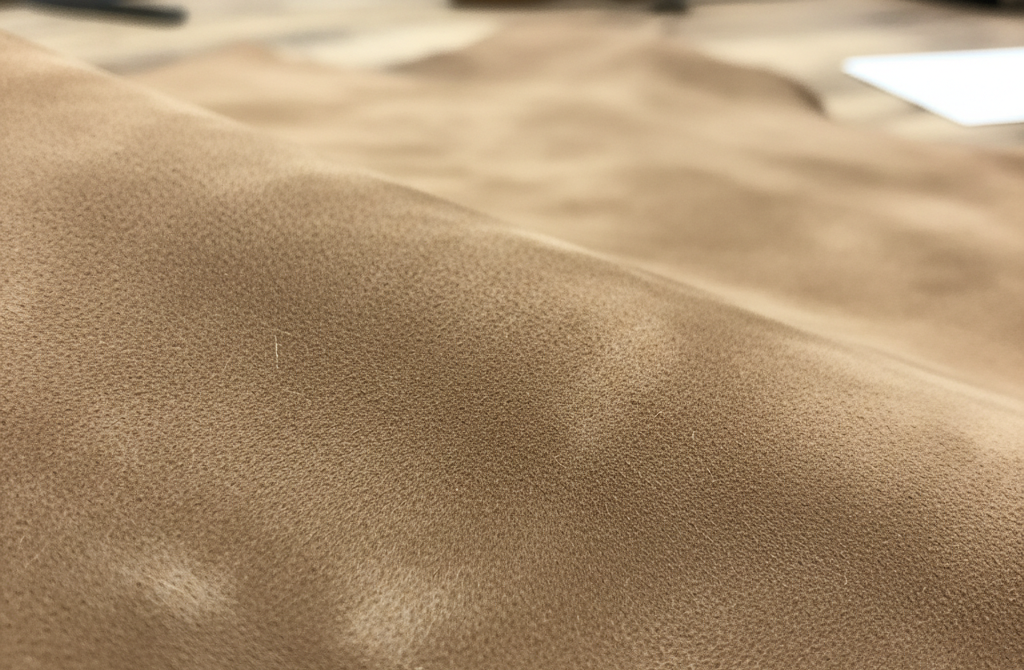
In exploring different types of leather, Nubuck is one of the best types of genuine leather, which stands out for its elegance and luxurious look. This leather is crafted from top-grain, which is the upper portion of the hide with slightly sanded or buffed on the grain side. The processing creates a gap between the outer and inner face, giving the leather a soft velvety structure with increased strength. Nubuck is significantly more durable than suede because it is sourced from the grain side of the hide which is quite strong.
Common uses:
Nubuck leather is highly used in making high-end footwear, outerwear, bags and others which need a luxurious finish. At Wasama, we value nubuck leather but prefer to use full-grain leather in creating our products, as it ensures better timelessness and elegance required for quality leather products.
How to identify Nubuck leather from other different types of leather in the UK?
The surface of nubuck leather feels warm, almost skin-like. Natural variations in colour across the hide are clearly visible. Water will absorb quickly (rather than beading), which indicates no protective coating.
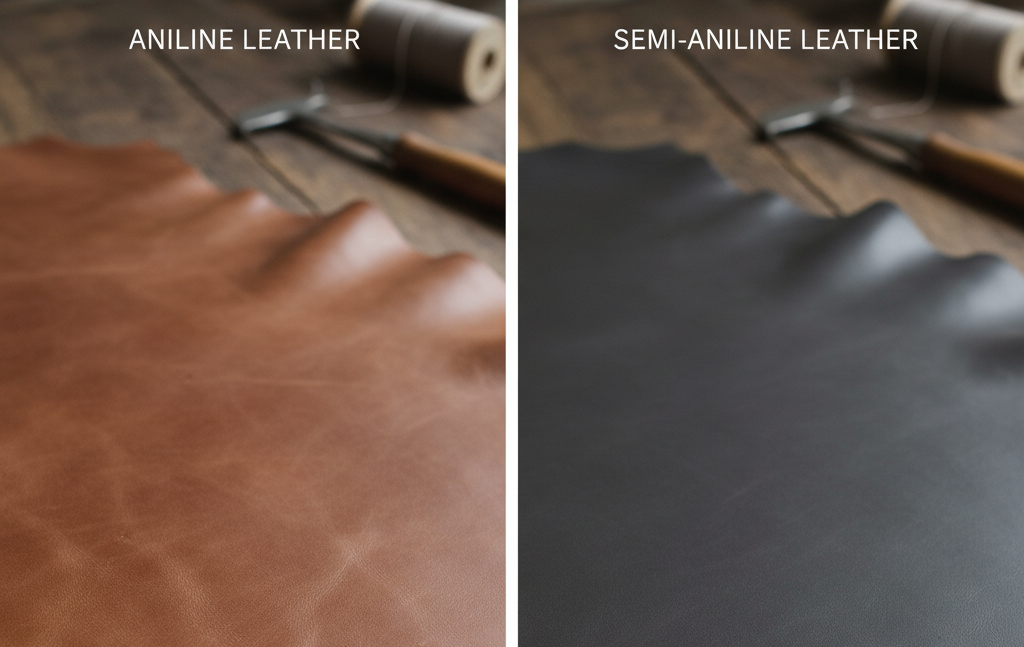
5. Aniline & Semi-Aniline Leather
In discussing different types of leather, one of the purest and natural forms of leather is aniline leather. This type of genuine leather is exclusively dyed with soluble aniline dyes that make it retain the natural grains, pores and imperfections while giving it a glossy finish. Semi-aniline leather is like aniline leather but differs in that it has a thin protective coat of aniline compared to aniline leather. It helps to show resistance to fading away of colour and texture in everyday use. However, aniline leather is more susceptible to fading and staining than semi-aniline leathers due to the absence of a protective surface layer.
Common uses: Aniline and Semi-aniline leather are among the different types of leather which are used in premium designer bags and luxury leather items. Its authenticity, coupled with comfort and natural aesthetics, makes it best to be used for creating high-end interior leather products which celebrate the craftsmanship of real leather.
How to identify Aniline & Semi-aniline leather from other different types of leather in the UK?
The protective coat provides more consistent colour and improved durability, making it the preferred choice for leather goods that will see regular, heavy use.
6. Suede Leather
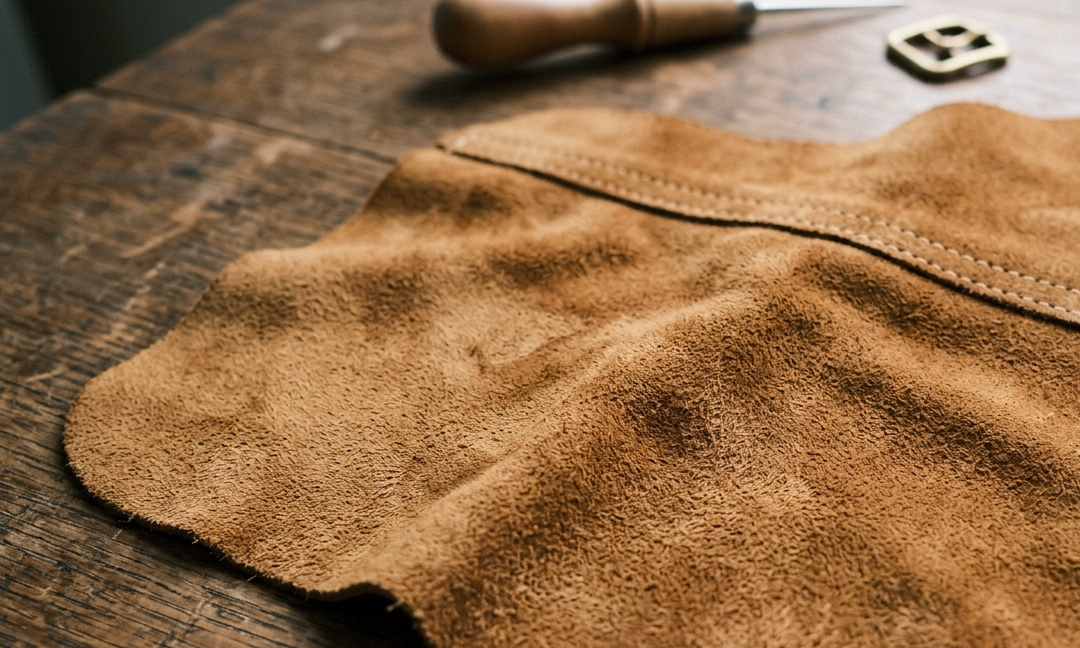
Suede leather, among the different types of leather, is easily recognised and preferred over full-grain leather. This type of genuine leather is soft and fuzzy, which brings a warm appearance. Suede is made from the inner split layers of the animal hide, which is the underside left to be used after extracting top-grain leather. Unlike nubuck, this type of leather is retrieved from the inside of the flesh in hide, which makes it flexible, softer, absorbent, but less durable, delicate and high maintenance. Suede is naturally more absorbent and far more susceptible to water damage and staining than grain leathers. It requires regular brushing and protective spraying to maintain appearance compared to other different types of leather in the UK.
Common uses: Suede is one of the best types of genuine leather after full grain leather, which is used in creating fashion footwear, dresses, accessories and more. At Wasama, we avoid using suede leather as it is against our principles to use products which do not ensure quality with strength and endurance.
How to identify Suede leather from other different types of leather in the UK?
The soft, directional nap is distinctive. Suede feels lighter and more pliable than nubuck. The reverse side (if visible) will be smooth.
7. Patent Leather
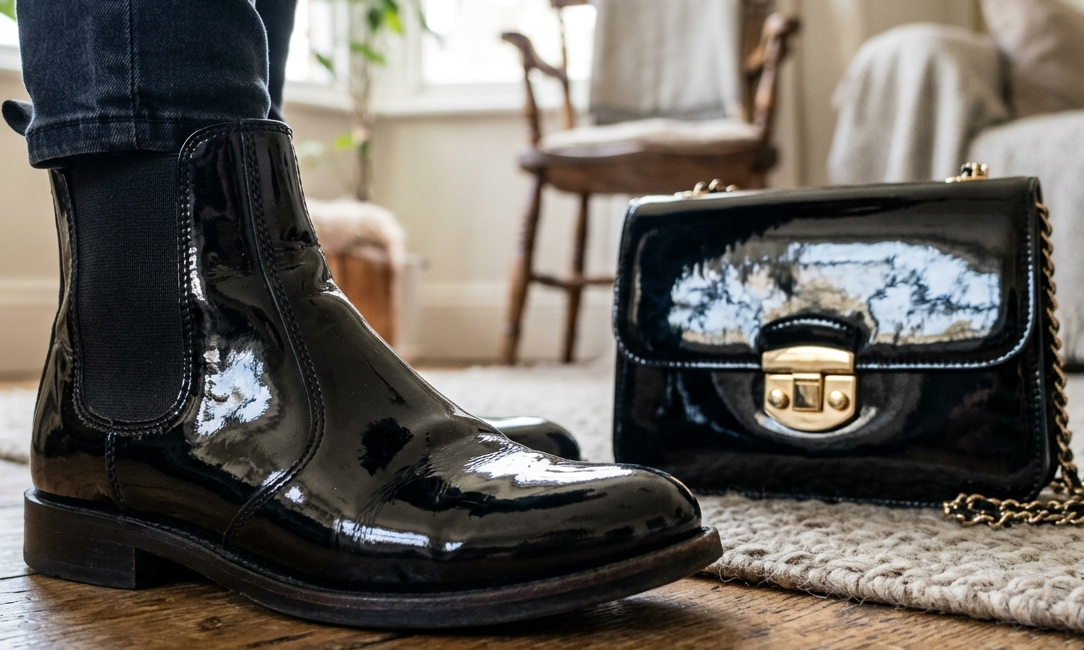
Patent leather stands out due to its instant shiny and luxurious appeal, which makes it one of the best among different types of leather, as the finish ensures a beautiful reflection of light. This type of genuine leather is made by using lacquer or polyurethane as a coating to give the mirror-polish look. This has no imperfections and is appropriate for modern products. Traditional patent leather mostly made by using linseed oil-based lacquers while modern versions typically use polyurethane. The base of this type of leather is durable, but the lacquer coating can crack with age, particularly in cold temperatures or with rough handling.
Common uses: The patent leather is commonly used in creating formal shoes, clutch bags and other accessories that need a glossy finish. The aesthetics makes this type of leather product elegant to be used in everyday life and occasion. At Wasama, we use patina leather to create better features and designs on full-grain leather. No products are entirely made from patent leather as it fails to provide the natural texture and authenticity of real leather.
How to identify Patent leather from other different types of leather in the UK?
The mirror-like, reflective surface is unmistakable. Patent leather has no natural breathability due to the thick coating.
8. Latigo Leather
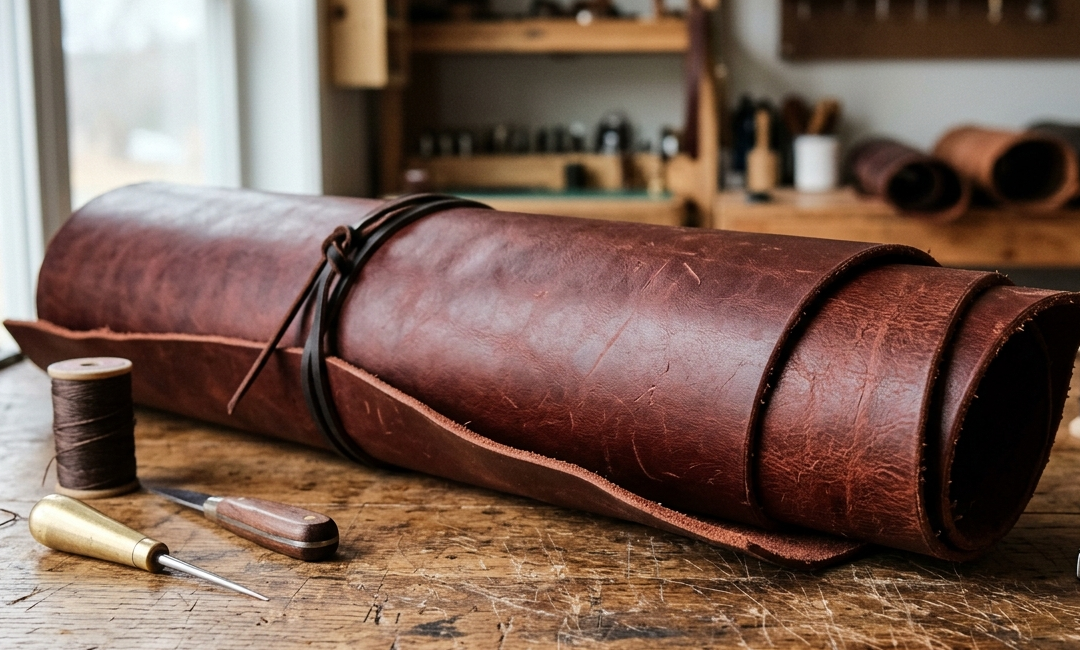
In discussing different types of leather, Latigo leather has exceptional strength, resilience and density. It is one of the unique types of genuine leather that undergoes a double tanning process involving chrome and vegetable tanning to create highly flexible and durable leather. Latigo can withstand extreme mechanical stress and weather exposure without cracking.
Common uses: The latigo leather is commonly used in making harnesses, straps, rugged outdoor accessories and others which needs high durability with weather resistance. At Wasama, we appreciate the remarkable toughness of Latigo leather and the traditional craftsmanship it represents. However, our design philosophy focuses on balancing strength without heaviness, and beauty without compromise. That’s why we rely on full-grain leather, which offers durability with a softer, more natural feel. Every Wasama product is created to age gracefully, celebrating the authenticity and texture that only true leather can offer.
How to identify Latigo leather from other different types of leather in the UK?
Latigo is frequently manufactured in heavier weights of 8–12 oz, making it noticeably denser and heavier than most leathers you’ll handle. Pick up a belt or strap and if it feels substantially heavier than expected for its size, latigo is a strong candidate.
9. Bonded/ Reconstituted Leather
Bonded or reconstituted leather is one of the different types of leather which is engineered at the cost of losing the natural form of leather. This is manufactured from ground leather scraps and fibres bound together with polyurethane or latex adhesives, then embossed with a leather-like texture. It can legally be called ‘leather’ in some markets, but it bears no resemblance in performance to natural leather. It typically begins to crack and peel within 1–3 years. In bonding them, polyurethane is used along with latex and other adhesives, which makes it look like one of the types of genuine leather, but has less quality than any real leather forms.
Common uses: Bonded leather is used to create low-cost accessories, furniture, book covers and other decorative products where the appearance is valued over durability. At Wasama, we avoid using bonded or reconstituted leather as it is against our rules to compromise natural craftsmanship for the value of durability.
How to identify Bonded leather from other different types of leather in the UK?
Suspiciously perfect surface texture (all pores identical). Lightweight for its size. Often peels at edges. May have a faint synthetic or glue smell rather than a genuine leather scent.
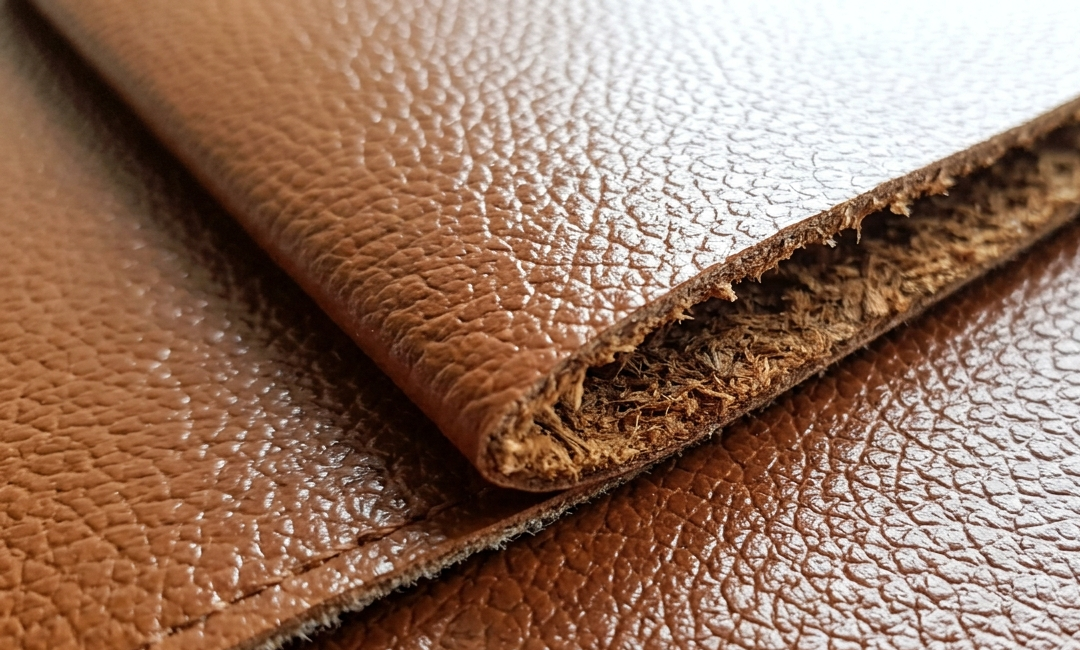
10. Bicast/Bycast Leather
Bicast leather is one of the modern, synthetic-infused leather which does not belong to any type of genuine leather. This is one of the different types of leather which has an embossed surface and is retrieved from the split layer of hide, which is the same section from where suede leather is extracted. This type of leather has a plastic coating which reduces its breathability and flexibility, making it stiffer and lacking natural texture.
Common uses: Bicast leather is primarily used in furniture, decorative items, and low-cost accessories where aesthetic uniformity is valued over long-term durability. It’s also found in some belts, handbags, and fashion goods designed to achieve a high-gloss look without the expense of premium hides. At Wasama, we deliberately avoid bicast or synthetic-coated leathers, as they compromise the essence of natural craftsmanship.
How to identify Bycast leather from other different types of leather in the UK?
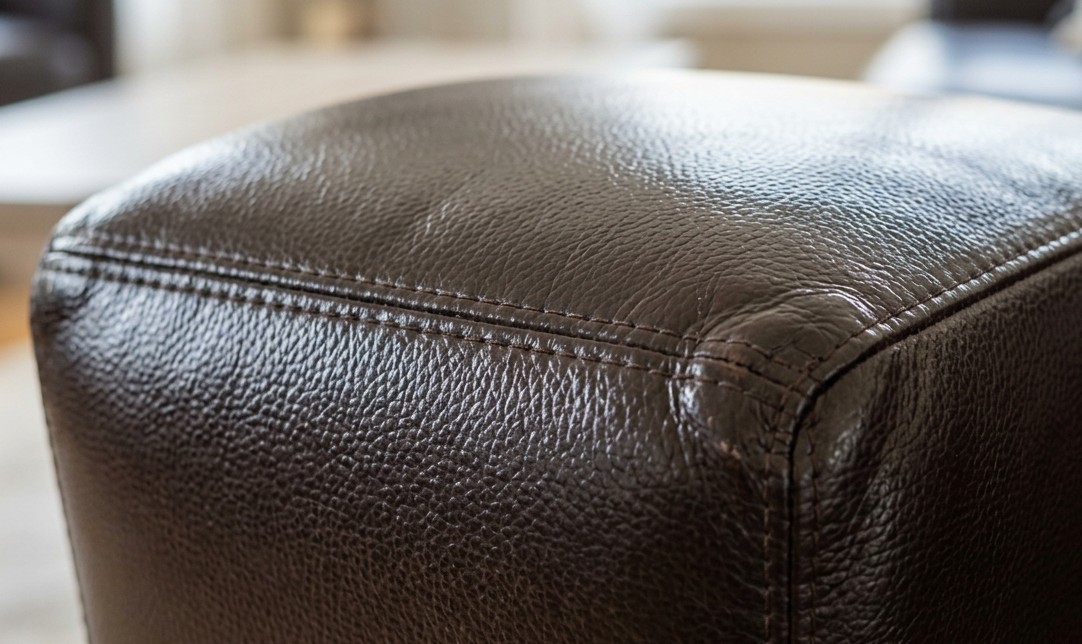
Heavy gloss, uniform texture, and very stiff feel. Bicast leather does not breathe and tends to feel uncomfortably warm against the skin.
Conclusion
Different types of leather reveal how craftsmanship, tanning, and texture shape both beauty and durability. From the timeless elegance of full grain to the versatility of top grain and the softer finishes found in other types of genuine leather, each different type of leather tells its own story. Understanding these distinctions helps you choose quality that lasts – whether it’s a finely stitched jacket or a full-grain leather wallet designed to age gracefully. At Wasama, we craft only from authentic, high-quality leathers that celebrate nature’s texture and endurance – explore our collection to experience true craftsmanship.
10 Different Types of Leather -FAQs
- What are the different types of leather?
The different types of leather include full grain, top grain, genuine, suede, nubuck, and bonded – each offering unique durability, texture, and appearance based on how the hide is processed.
- What is the best different type of leather for long-lasting products?
Among all, full grain leather is the most durable and authentic different type of leather, maintaining strength, natural texture, and aging beautifully with a rich patina over time.
- Are all types of genuine leather the same?
No. The types of genuine leather vary in quality – full grain is premium, while split and bonded leathers are less durable and often coated for appearance.
- Why does a full grain leather wallet last longer?
A full grain leather wallet retains the hide’s natural fibers, making it strong, breathable, and capable of developing a timeless patina that enhances its look with use.
- How can I identify different types of leather?
You can recognize the different types of leather by texture and finish – full grain feels natural, top grain smooth, while genuine or split leathers have a coated or embossed surface.
- What type of leather does Wasama use in its products?
Wasama exclusively uses full grain leather, the highest grade among all types of genuine leather, ensuring each product embodies strength, authenticity, and natural beauty.
- Does Wasama make full grain leather wallets?
Yes. Every full grain leather wallet by Wasama is crafted from premium hides, designed to age gracefully while retaining its natural texture and durability for years.
- Why does Wasama avoid synthetic or coated leathers?
At Wasama, we believe true craftsmanship means staying authentic. We avoid coated or synthetic materials like bicast or bonded leather, preferring natural, high-quality different types of leather that last.
- How does Wasama maintain quality across different type of leather products?
Each different type of leather used by Wasama is carefully sourced and tested for purity, texture, and endurance – ensuring lasting elegance and reliability in every handcrafted piece.
- Why should I choose Wasama for genuine leather accessories?
Because Wasama celebrates craftsmanship through authentic types of genuine leather. Our pieces, like the full grain leather wallet, combine timeless design with durability, offering you style that matures beautifully.


