
Essay Writing and Mathematics: Structuring Logic Thinking
Introduction: Where Words Meet Numbers
Essay writing and mathematics are often viewed as separate academic disciplines, one rooted in language and interpretation, the other in numbers and precision. Yet beneath this surface difference lies a shared foundation: structured logic. Both require the ability to organize ideas, follow coherent steps, and arrive at a well-supported conclusion.
In essay writing, logic ensures that arguments flow naturally from one point to the next. In mathematics, logic ensures that each step in a proof or calculation is valid and leads to a correct result. According to the Stanford Encyclopedia of Philosophy, logic is the study of reasoning principles that govern valid inference, a concept central to both disciplines.
Understanding this connection can significantly improve academic performance. Students who learn to structure their thinking in one domain often find it easier to apply similar strategies in the other.
Shared Foundations of Reasoning
At the core of both essay writing and mathematics is the idea of progression. In essays, ideas must be introduced, developed, and concluded in a meaningful sequence. In mathematics, problems are solved step by step, where each operation depends on the previous one.
This shared structure is not accidental. Cognitive science suggests that structured reasoning is a universal mental skill. Whether a student is analyzing a literary text or solving an algebraic equation, the brain relies on similar processes of pattern recognition, sequencing, and inference.
In essay writing, this may appear as thesis development and evidence evaluation. In mathematics, it appears as theorem application and problem decomposition. Despite different outputs, both disciplines rely on the same intellectual architecture.
Logic as the Bridge Between Disciplines
The relationship between essay writing and mathematics becomes clearer when we examine logic as a bridge between them. Logical thinking provides a framework that helps writers and mathematicians organize complexity into manageable parts.
Argument Structure and Mathematical Proofs
A strong essay is built on a central argument supported by evidence. Each paragraph contributes to proving the thesis, much like each step in a mathematical proof contributes to proving a theorem. This similarity is especially visible in formal logic and proof based mathematics, where conclusions must follow inevitably from premises.
For example, when writing an essay on climate change, a student might present data, interpret findings, and draw conclusions. Similarly, in mathematics, a proof might begin with known axioms, proceed through transformations, and end with a verified result. Both require careful attention to consistency and validity.
This parallel structure highlights why many educators recommend integrating mathematical reasoning techniques into writing instruction. It encourages students to think in terms of clarity, order, and justification.
Internal resource for further study: mathematics essay serivce
Precision, Clarity, and Meaning
Mathematics demands precision, where every symbol has a fixed meaning. Essay writing, while more flexible, benefits greatly from similar clarity. Ambiguous language can weaken an argument just as an incorrect symbol can break a mathematical equation.
Clear writing requires defining terms, maintaining consistent ideas, and avoiding contradictions. These practices mirror mathematical discipline, where definitions and rules are strictly observed. The ability to express ideas precisely is therefore a shared skill that strengthens both disciplines.
Structuring Thought Like a Mathematician
One of the most effective ways to improve essay writing is to adopt a mathematical approach to structuring thought. This does not mean turning essays into equations, but rather applying disciplined reasoning.
Stepwise Development of Ideas
In mathematics, complex problems are broken down into smaller steps. This method can be applied directly to essay writing. A strong essay does not attempt to address everything at once. Instead, it develops one idea at a time, ensuring each point is fully explained before moving on.
For instance, when discussing economic inequality, a writer might first define the concept, then explore causes, and finally examine consequences. This mirrors the mathematical approach of isolating variables and analyzing them systematically.
Consistency and Logical Flow
Mathematical solutions must remain consistent throughout. A single contradiction invalidates the entire argument. Essays follow a similar principle. If a writer introduces conflicting ideas without resolution, the overall argument becomes weak.
Logical flow ensures that each paragraph connects naturally to the next. Transitioning ideas should feel inevitable, not forced. This is similar to how each step in a mathematical proof follows necessarily from the previous one.
Cognitive Benefits of Combining Both Skills
Research in education shows that integrating mathematical reasoning with writing skills enhances overall cognitive development. Studies published by institutions such as Cambridge University Press emphasize that structured thinking improves comprehension and analytical ability across subjects.
Improved Problem Solving
Students trained in both essay writing and mathematics tend to approach problems more systematically. They are better at identifying key information, discarding irrelevant details, and building coherent solutions. This is because both disciplines train the mind to prioritize structure over randomness.
Enhanced Academic Communication
Clear communication is essential in both academic essays and mathematical explanations. A student who understands how to logically organize a mathematical solution is also better equipped to write persuasive essays. This cross disciplinary skill becomes especially valuable in higher education and research environments.
Visualizing Logic in Writing and Mathematics
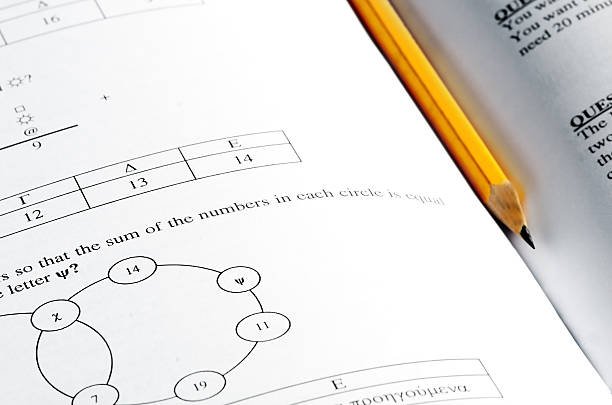
Visual tools can help illustrate the shared structure of essay writing and mathematics. For example, a diagram showing an essay as a flow of interconnected ideas resembles a mathematical proof tree, where each node depends on previous statements.
Such visualizations reinforce the idea that both disciplines rely on structured progression rather than isolated ideas. They help learners see that logic is not abstract but deeply practical.
Educational Applications and Teaching Strategies
Educators increasingly recognize the value of teaching writing and mathematics together through shared logical frameworks. Instead of treating them as separate subjects, integrated teaching approaches encourage students to see the common patterns of reasoning.
Developing Analytical Thinking Early
When students are taught to justify their answers in mathematics and support their claims in writing, they develop stronger analytical habits. This dual reinforcement helps them understand that knowledge is not just about memorization but about structured reasoning.
Encouraging Interdisciplinary Learning
Modern education systems benefit from interdisciplinary approaches. By connecting essay writing with mathematical logic, students gain a more complete understanding of how ideas are constructed and communicated. This prepares them for academic fields that require both numerical and verbal reasoning.
Conclusion: The Unity of Structured Thinking
Essay writing and mathematics may appear different, but they are deeply connected through the principle of structured logic. Both disciplines require clarity, consistency, and step by step reasoning. Whether constructing an argument or solving an equation, success depends on the ability to think in an organized and logical way.
Recognizing this connection allows students to transfer skills between subjects, improving both their analytical and communication abilities. Ultimately, structured thinking is not limited to one discipline. It is a universal skill that supports academic success across all fields of study.


