
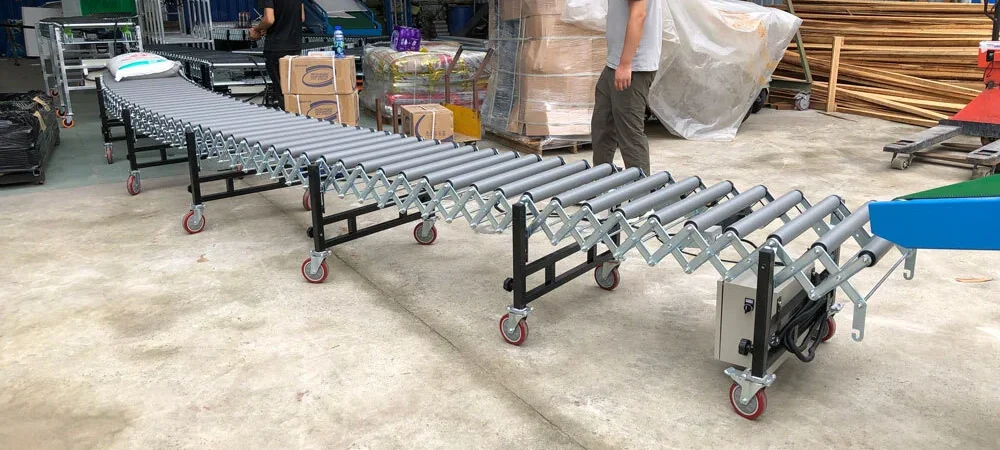
Not all material handling tasks involve light, easy-to-carry items, and many facilities regularly move heavier cased goods, industrial parts, or bulk packaged products that put significantly more strain on both equipment and workers than lighter parcels ever would. Manual handling of these heavier loads carries a much higher risk of injury and slower overall throughput, since workers naturally have to move more carefully and take more breaks when dealing with weightier items on a consistent basis throughout the day. A motorized flexible conveyor built for heavier use addresses this challenge directly.
Built for Higher Load Capacities
Heavy-duty versions of this equipment typically use reinforced frames and stronger motors capable of maintaining steady speed even when carrying items near the top of the rated weight limit, without the slowdown or strain that a lighter-duty model might experience under the same conditions. This ensures that performance doesn’t drop off noticeably as loads get heavier, which is a common weak point in lighter-duty models that were never designed with consistently heavy items in mind from the start.
Reducing Injury Risk With Heavier Loads
Manually carrying heavy boxes or cased goods is one of the most common causes of workplace back injuries in warehouse and factory settings, and the risk only increases the more frequently workers are asked to repeat the task throughout a shift. A motorized flexible conveyor removes much of this risk by handling the actual weight-bearing movement, letting workers guide rather than lift heavier items throughout a shift, which can make a substantial difference in injury reports over the course of a full year.
Maintaining Speed Under Heavy Loads
One of the biggest differences between a standard and a heavy-duty model is how well speed holds up as load weight increases, since some units that look impressive on paper struggle noticeably once they’re actually carrying a full, heavy load. Testing or reviewing performance data at maximum rated capacity, rather than just light-load speed, gives a much clearer picture of how the conveyor will actually perform during demanding daily use in a facility that regularly handles heavier goods.
Durability Considerations for Heavy Use
Frames and rollers rated for heavier loads generally need to be inspected and maintained more diligently, since the added stress can accelerate wear over time in ways that might not be immediately obvious during casual daily use. Regular checks on roller alignment, motor performance, and frame joints help catch small issues before they turn into costly breakdowns during a busy production or shipping schedule, when unexpected equipment failure can bring an entire line of work to a frustrating halt.
Choosing the Right Heavy-Duty Model
Buyers dealing with consistently heavy loads should prioritize maximum rated capacity, motor strength, and frame durability over portability alone, since these factors matter more when regularly handling weightier items than the convenience of quickly folding the unit away between uses. Taking time to compare heavy-duty specifications carefully leads to a much more dependable long-term solution for demanding material handling tasks that would otherwise wear out a standard, lighter-duty conveyor far too quickly.


