
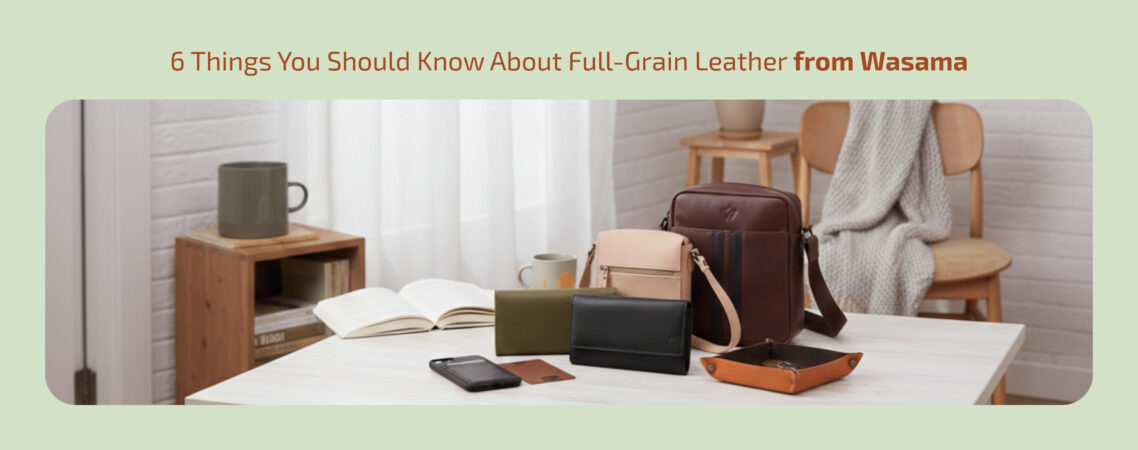
Full-grain leather represents the highest standard of leather craftsmanship, yet it remains one of the most misunderstood materials in the market. Many products today are labelled as leather, but very few truly deliver the strength, longevity, and character that buyers expect. Understanding full-grain leather helps you move beyond surface-level marketing terms and make informed decisions that prioritise durability, authenticity, and long-term value.
At Wasama, we work exclusively with full-grain leather because we believe leather goods should age with you rather than wear out. This guide explains what full-grain leather really is, where it comes from, how it differs from other types of leather, and why it is considered the best quality genuine leather for everyday essentials such as a full-grain leather wallet or a full-grain leather bag.
Overview of Full-Grain Leather
Full-grain leather comes from the topmost layer of an animal hide, where the natural grain remains fully intact. Unlike other leather types that are sanded, corrected, or artificially smoothed to remove surface marks, full-grain leather is left untouched. This preserved grain layer is the strongest part of the hide, which is why full-grain leather is known for its exceptional durability, breathability, and natural texture. The surface retains its original fibre structure, allowing the leather to respond naturally to use, movement, and environmental conditions.
What many people mistake as imperfections are actually signs of authenticity. Visible pores, subtle wrinkles, and natural markings indicate that the leather has not been altered to achieve a uniform appearance. These characteristics allow full-grain leather to flex comfortably and age gracefully over time, developing depth and richness that processed or synthetic materials cannot replicate. This is why everyday essentials such as a full-grain leather wallet or a full-grain leather bag feel noticeably different in hand. The material feels firm yet organic, structured yet warm, reflecting the integrity of the intact grain layer. This natural quality is what truly sets full-grain leather apart from all other leather grades.
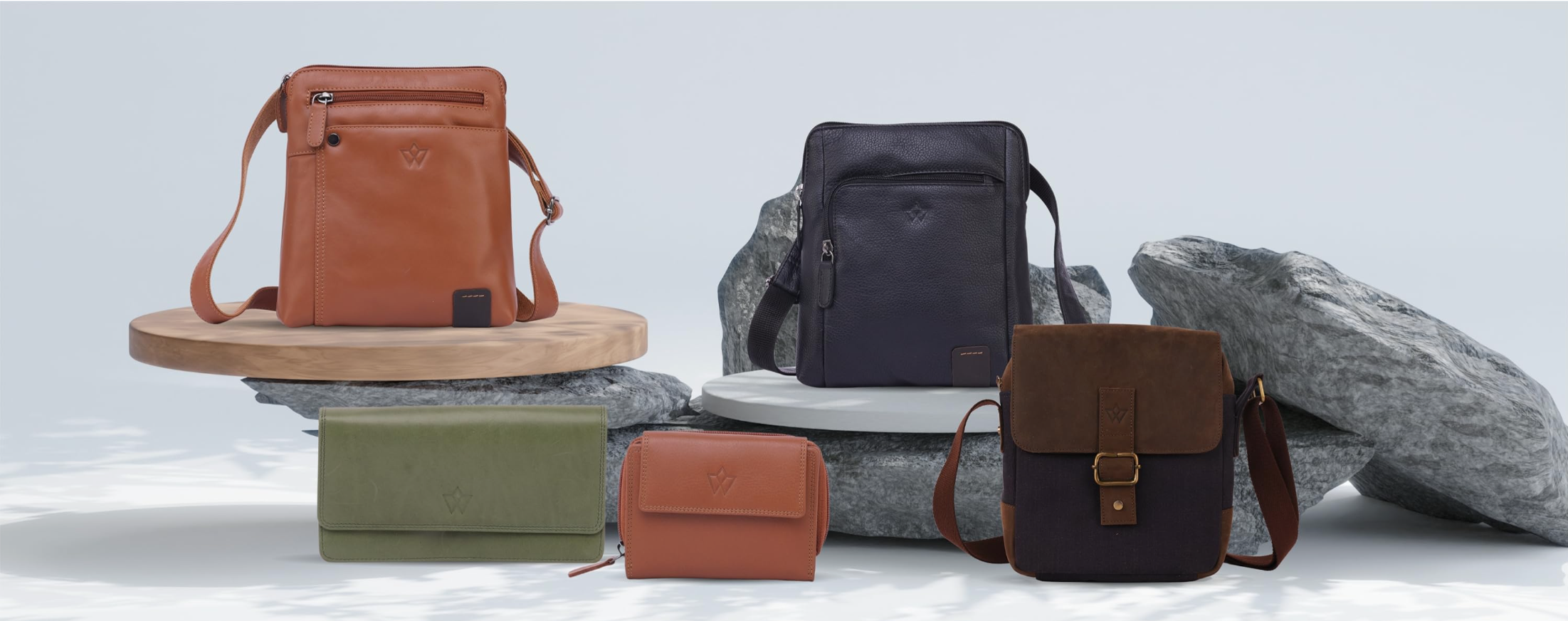
6 Things to Understand About Full-Grain Leather Before Buying
Choosing leather products is often influenced by appearance and price, but long-term value depends on understanding the material itself. Full-grain leather behaves differently from other leather grades in terms of durability, ageing, and performance. Knowing these distinctions before buying helps you recognise genuine quality and make informed decisions that last beyond short-term trends.
1. Purest Form of Genuine Leather
Full-grain leather is considered the purest form of genuine leather because it retains the hide’s complete grain layer. This layer contains the strongest fibres, which give the leather its durability, breathability, and resistance to wear. Unlike corrected or processed leather, full-grain leather is not altered to mask natural characteristics. At Wasama, this untouched grain is intentional because strength and authenticity cannot be recreated once the surface is modified.
This natural integrity becomes especially important in everyday essentials, which makes it one of the reasons to buy a full-grain leather wallet from Wasama. As Wasama’s leather wallets resist stretching and surface fatigue despite frequent handling. In the same way, a full-grain leather bag maintains its structure and tactile richness over time. This preservation of the original hide is why full-grain leather is consistently regarded as the highest quality option available.
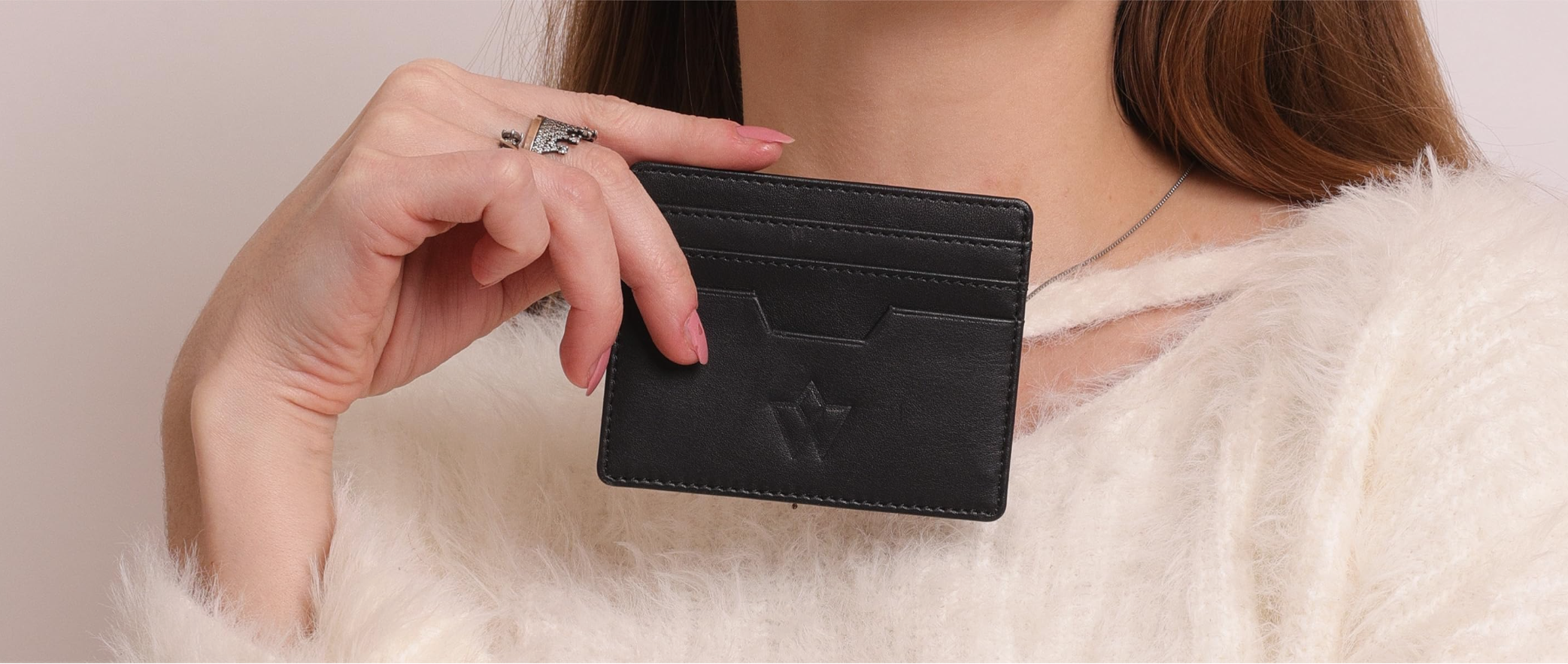
2. Non-Cruel, and Waste-Conscious Use of Natural Materials
Full-grain leather is sourced from animal hides that are a by-product of the meat industry, which means animals are not raised or harmed solely for leather production. When these hides are used responsibly, leather becomes a material that avoids cruelty while also preventing unnecessary waste. Instead of being discarded and contributing to landfill accumulation, hides are repurposed into durable goods, supporting a more circular use of natural resources.
What truly distinguishes full-grain leather is not just its origin, but the careful selection of hides that are structurally strong and suitable for long-term use. Only hides with an intact and healthy grain layer are chosen, ensuring the material can withstand years of regular use without breaking down. This focus on quality directly reduces waste generation, as products made from full-grain leather do not require frequent replacement.
Wasama’s approach to material sourcing prioritises durability, transparency, and purpose over mass production. By choosing high-quality hides that retain their natural grain, Wasama ensures that every full-grain leather bag and full-grain leather wallet is designed for longevity rather than short-lived appeal. Responsible and non-cruel sourcing, combined with thoughtful design, allows leather goods to age gracefully while contributing to waste reduction through extended product life.
3. Minimal Processing Is What Preserves Strength and Longevity
The defining characteristic of full-grain leather lies in how little it is processed. Once the hide is cleaned and stabilised through tanning, the natural grain surface is left intact. There is no sanding, surface correction, or artificial coating applied to create visual uniformity. This restraint preserves the original fibre structure of the hide, which plays a direct role in how the leather performs, ages, and retains strength over time.
This difference becomes evident when full-grain leather is used in everyday items that experience constant handling. For example, Wasama’s full-grain leather wallets are designed to withstand repeated folding, pressure from cards and cash, and daily friction inside pockets. Because the grain layer remains untouched, the leather flexes naturally without cracking or thinning at stress points. Over time, the surface develops a smooth patina instead of peeling or breaking down, which is common in heavily processed leather wallets.
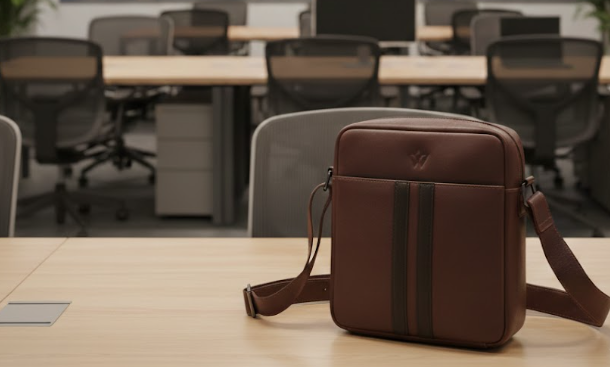
The same principle applies to Wasama’s full-grain leather bags, including everyday carry bags and compact sling styles. These products are exposed to weight, movement, and environmental contact regularly. Minimal processing ensures that the leather retains its structural integrity, allowing the bag to hold shape and support weight without sagging or weakening at seams. Instead of relying on synthetic reinforcements to compensate for weakened leather, the material itself provides the strength.
4. Full-Grain Leather Performs Differently From Other Leather Types
Not all types of leather perform the same way over time, even if they look similar at the point of purchase. Top grain leather is lightly corrected to remove surface marks, which makes it visually uniform but also reduces surface strength. Genuine leather is produced from lower layers of the hide and lacks the dense fibre structure needed for long-term resilience. Bonded leather goes a step further by combining leather scraps with synthetic binders, which causes it to crack, peel, or delaminate with regular use.
Full-grain leather performs differently because it retains the strongest and most compact fibres of the hide. This difference becomes evident only with time and use. For instance, Wasama’s full-grain leather bags are designed for repeated daily movement, carrying weight, and exposure to friction at handles, seams, and edges. Because the grain layer remains intact, the leather holds its shape and surface integrity instead of collapsing or peeling, which is common in corrected leather bags after prolonged use.
5. Long-Term Value Beyond First Impressions
The real value of full-grain leather becomes clear only after extended use. Unlike materials designed to look perfect at the point of purchase, full-grain leather is chosen for how it performs over the years of ownership. Its ability to remain functional, dependable, and visually relevant over time is what makes it the best quality genuine leather in practical terms.
Wasama designs its products for daily, repeated use rather than occasional display. A full-grain leather wallet is handled multiple times every day, exposed to pressure, movement, and changing environments. Over time, instead of losing shape or developing surface damage, the wallet adapts to use. It softens where needed, holds its form where required, and continues to function reliably without needing replacement, making it one of the valuable reasons to buy Wasama’a leather wallets.
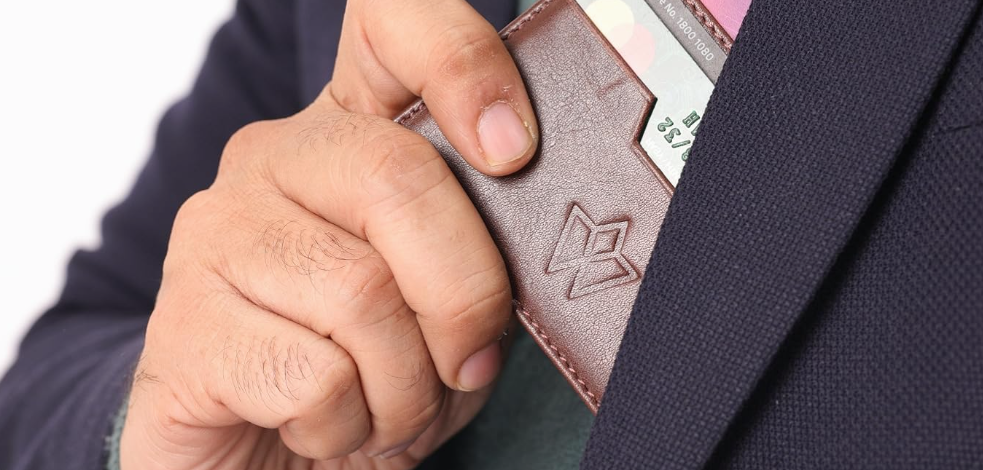
The same long-term value applies to a full-grain leather bag. Whether used for work, travel, or everyday carrying, the bag experiences weight, friction, and constant motion. Rather than deteriorating, the leather settles into its role. The bag becomes easier to carry, more comfortable to use, and more personal with time, without compromising its structure or utility.
From a cost perspective, this longevity changes the equation entirely. While full-grain leather products may involve a higher initial investment, their extended lifespan reduces the need for frequent replacements. Wasama views this as intentional design rather than premium positioning. By creating products meant to stay in use for years, full-grain leather supports mindful ownership, reduces waste generated by short-lived alternatives, and delivers value that grows rather than diminishes over time.
6. Debunking Myths About Full-Grain Leather
Full-grain leather is often misunderstood because its qualities are judged at first glance rather than over time. One common misconception is that full-grain leather is stiff or uncomfortable. In reality, the initial firmness comes from the intact grain structure, which gradually softens with regular use while still retaining strength. This balance between flexibility and durability is precisely what allows full-grain leather to perform reliably in everyday products.
Another widespread misunderstanding is that visible marks, grain variation, or subtle surface irregularities indicate poor quality. These natural characteristics are not defects. They are evidence that the leather has not been artificially altered or corrected. A full-grain leather wallet or a full-grain leather bag with natural grain variation reflects authenticity and material integrity rather than imperfection. Over time, these variations blend into a richer surface, adding depth and character instead of visual damage.
Some buyers also assume that full-grain leather requires excessive maintenance. In practice, it demands very little care, and effective leather care practice ensures its longevity. Occasional cleaning and conditioning are enough to keep the leather healthy. Because the grain layer remains intact, the material is naturally resistant to cracking and surface breakdown, reducing the need for constant care.
Wasama embraces the natural behaviour of full-grain leather rather than masking it. These characteristics confirm the honesty of the material and allow each full-grain leather wallet and full-grain leather bag to age naturally, proving its quality through use rather than surface perfection.
Conclusion
Full-grain leather stands apart because it combines authenticity, durability, and timeless appeal. From its responsible origins and minimal processing to its unmatched strength and natural ageing, it represents the highest standard of genuine leather. Choosing a full-grain leather wallet or a full-grain leather bag is not about trends or labels. It is about investing in craftsmanship that lasts, materials that improve with time, and products that carry meaning beyond their function. At Wasama, we believe informed choices lead to better ownership experiences. Full-grain leather is not just a material. It is a commitment to quality that grows stronger with every year of use.
6 Things You Should Know About Full-Grain Leather -FAQs
1. What makes full grain leather different from other leather types?
Full-grain leather retains the complete natural grain of the hide, making it stronger, more breathable, and longer-lasting than top-grain, genuine leather, or bonded leather.
- Is full grain leather real leather or just a marketing term?
Full-grain leather is real, genuine leather taken from the strongest part of the hide. It is not reconstructed, bonded, or artificially corrected, unlike many lower-grade leather products.
- Why is full-grain leather more expensive?
Full-grain leather costs more because it uses premium hides, requires minimal correction, and lasts significantly longer, offering better value over time compared to cheaper leather alternatives.
- Does full-grain leather crack or peel over time?
No. Because the grain layer remains intact, full-grain leather resists cracking and peeling, especially when compared to corrected or bonded leather that relies on surface coatings.
- How does a full-grain leather wallet perform with daily use?
A full-grain leather wallet resists stretching, surface breakdown, and edge wear, making it ideal for daily handling while developing a natural patina instead of looking worn out.
- Is a full-grain leather bag suitable for everyday use?
Yes. A full-grain leather bag handles repeated weight, movement, and handling without losing structure, which makes it suitable for work, travel, and long-term everyday use.
- Does full grain leather need special maintenance?
Full-grain leather requires minimal care. Occasional cleaning and light conditioning are enough to maintain its strength and appearance, as the natural grain protects the surface.
- Is full-grain leather ethically sourced?
Full-grain leather comes from hides that are a by-product of the meat industry. When sourced responsibly, it prevents waste and supports sustainable use of natural materials.
- Will full-grain leather change colour over time?
Yes. Full-grain leather develops a patina through use and exposure, deepening in tone and character. This natural ageing enhances appearance rather than reducing quality.
- Why does Wasama use full-grain leather in its products?
Wasama uses full-grain leather because it offers durability, authenticity, and long-term value, aligning with the brand’s focus on timeless design, everyday functionality, and materials that age naturally.


