
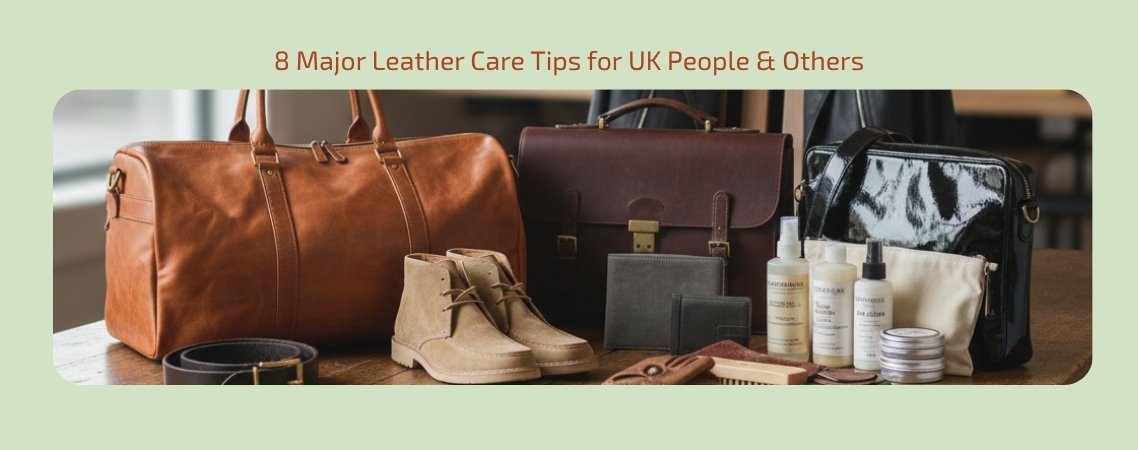
Leather care is the foundation of making any real leather product last for decades rather than years. Whether you own a full-grain leather wallet, a suede jacket, or an aniline leather sofa, understanding how to clean, condition, and store your items correctly makes the difference between leather that ages beautifully and leather that cracks, fades, or warps prematurely. Leather care is important for maintaining real leather products from unwanted damage while ensuring their strength, texture, and longevity. Be it is everyday leather wallets or real leather bags, belts, and other wearable pieces, understanding how to care for leather products is significant.
This guide covers eight essential leather care practices that apply to all leather types, followed by specific care strategies for nine different kinds of leather — including full or top-grain, suede, nubuck, aniline, patent, and bonded leather. It also includes a practical leather care kit breakdown and a product-by-product reference table.
Whether you are new to caring for leather goods or looking to refine your routine, this is the complete resource you need.
How to Care for Your Leather Goods? : 8 Common Ways
Caring for leather begins with knowing that they are made from natural fibres and responds differently to moisture, pressure, temperature, and handling techniques. Effective top-grain, aniline, nubuck leather care involves maintaining internal fibre balance by polishing the surface. These are a few of the common leather care approaches to be followed in protecting any kind of real leather products:
1. Maintaining Moisture Balance
The basic part of caring for real leather compared to fake leather is understanding that it is similar to human skin, which needs a proper moisture balance to avoid losing structure or drying. Leather needs to stay neither too dry nor too wet as excessive moisture leads to mould, warping, and staining, while insufficient moisture causes the leather to stiffen, crack, and lose its characteristic suppleness. Thus, one of the approaches to full or top-grain, suede, and nubuck leather care is keeping the leather neither too moist nor wet.
When leather becomes wet from rain, spills, or perspiration, blot the surface immediately with a clean, dry cloth and do not rub. Allow the item to air dry at room temperature in a well-ventilated space. Never use a hair dryer, radiator, or direct sunlight to speed up drying as these heat sources strip the natural oils from the hide rapidly, making the leather brittle and causing the surface to crack or discolour far sooner than it should.
This moisture management step should always be completed before applying any product from a leather care kit. Applying conditioner to a damp surface traps moisture inside the fibres, which causes long-term structural damage.
2. Gentle & Regular Cleaning
Cleaning your leather clothes or accessories does not mean washing or rubbing them aggressively, just like other items, to get that stain off or overcome that dirty spot. You need to routinely and gently wash your real leather items as part of leather care. Use a soft, dry cloth to get that dirt off, or use a slightly damp cloth to try removing that simple dirt stain bothering you for some time. Remember to thoroughly dry the leather item before storage after cleaning to avoid dampness and moisture.
A part of real leather care, always avoid alcohol-based wipes, household cleaning sprays, bleach, or washing-up liquid on real leather. These products strip the leather’s natural oils, causing it to dry out, stiffen, and crack prematurely. For a thorough clean, use the pH-safe cleaner included in a dedicated leather care kit, as this is formulated to remove dirt without altering the leather’s surface chemistry. Wasama suggests this approach be used for all kinds of full or top-grain and suede leather care.
3. Keeping in Breathable Storage
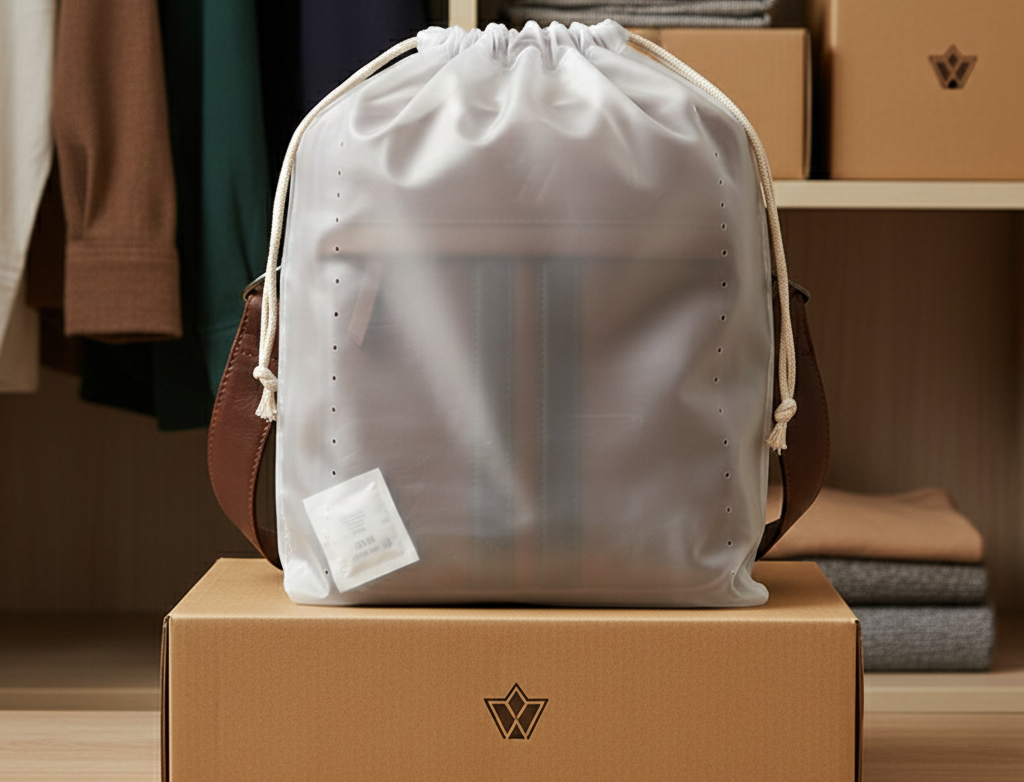
Just like your skin has pores and needs air, each of your real leather products needs air to breathe. Storing leather goods in sealed plastic bags or airtight containers traps moisture against the hide, encouraging mould growth and producing the musty odour that is extremely difficult to remove from leather.
Store leather items in breathable cotton dust bags, the original tissue paper wrapping, or unbleached breathable paper. Keep items away from radiators, direct sunlight, and damp environments such as un-insulated garages or cellars. For bags and structured leather goods, maintain the shape during storage using tissue paper or a soft insert to prevent permanent creasing.
At Wasama, we suggest all consumers using our leather wallets, leather crossbody bag, real leather luggage, etc, wrap them in the same breathable paper as provided during the product delivery. Strictly avoid any plastic or vinyl bags for leather care as they trap moisture and damage real leather products.
4. Limited Sun Exposure
Many suggest keeping a leather bag in the open sun will help you get over the odour and moisture. However, one thing forgotten for either of the top-grain, suede, or nubuck leather care approaches is that sunlight gradually fades the dyes used in leather and degrades the natural oils and fibres within the hide. This causes leather to stiffen, lose colour uniformity, and develop surface cracking which is a form of damage that is largely irreversible.
When drying leather naturally, rotate the item every 20–30 minutes to avoid one side drying faster than the other. Fpr Wasama or any other brand, whether you are caring for aniline leather or focusing on suede leather care apart from full or top-grain and other types of leather, always control the exposure to sunlight. This helps to avoid the leather from becoming stiff, dry or discoloured. As part of leather care, remember to rotate the products frequently during drying in normal air and storage to avoid one area from ageing faster compared to others.
5. Avoid Staining
Real leather is naturally porous, and any oil, ink or food stains often affect deeper fibres as they get in the pores, which makes these stains difficult to remove. The best actions for avoiding these as part of leather care are to prevent such stains. Prevention is the most effective form of leather care. Keep pens capped when stored in leather bags or wallets. When wearing a leather jacket or bag in crowded or food-heavy environments, be mindful of contact with surfaces.
At Wasama, we suggest customers use our real leather wallets and bags to carry liquids in tightly closed bottles, use a separate purse for make-up products, keep pens closed, and others to avoid stains. For any leather, be it nubuck leather care or caring for aniline leather, the approach is handling leather products with caution and ensuring protective breathable covers are used while roughly managing them for everyday purposes.
6. Leather Conditioning
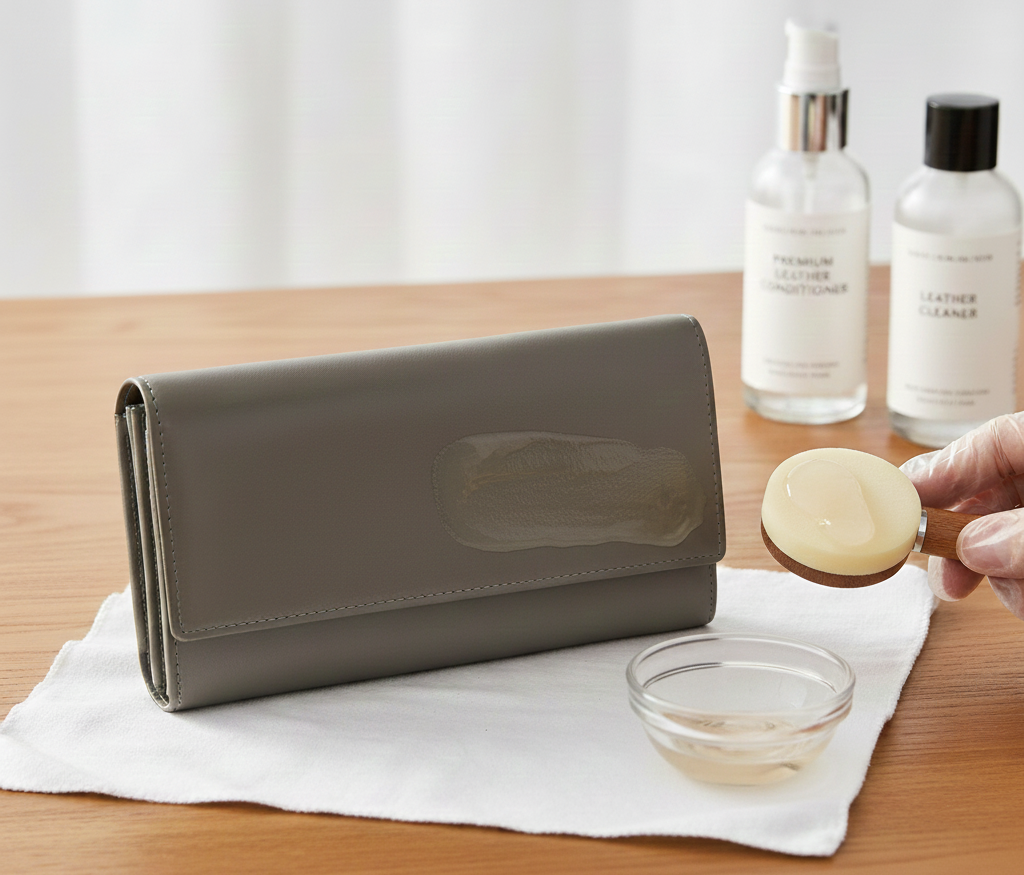
All the real leather products support conditioning, such as full-grain or full or top-grain leather, which has natural pores on the hide of the skin that help in absorbing the essential oils from the conditioner. This conditioning acts as a supplement for maintaining the softness and glaze of the original leather.
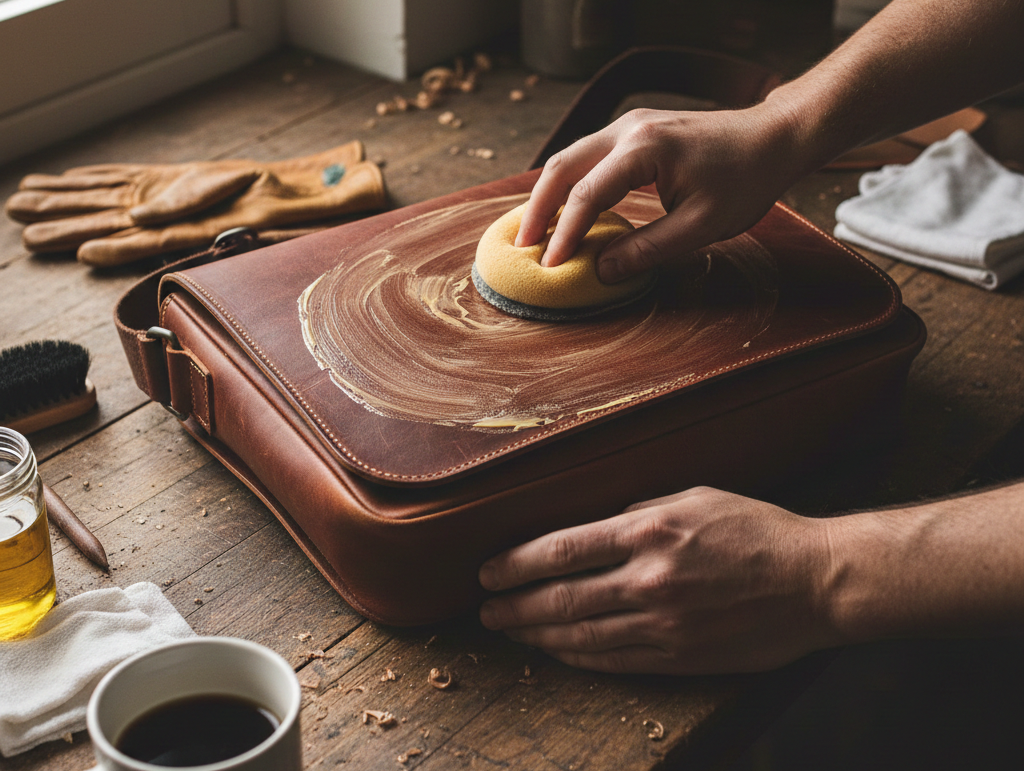
Always use a gel or cream conditioner rather than a liquid conditioner. Liquid conditioners introduce excess moisture and can over-saturate the fibres. Apply a small amount using a clean microfibre cloth in gentle circular motions, allow it to absorb for 10–15 minutes, then buff away any residue. Condition full-grain and top-grain leather every 3–4 months under normal use and not monthly. Over-conditioning softens the fibres beyond their natural state and can accelerate surface wear. Importantly, do not apply standard conditioners to suede, nubuck, patent, bycast, or bonded leather as each of those types requires a different approach, covered in the type-specific section below.
We at Wasama suggest using conditioner from the leather care kit, as it avoids damage to the original hide and ensures longer life of the products. However, always use gel conditioner instead of liquid conditioner to avoid moisture, which may damage the real leather products.
7. Brushing
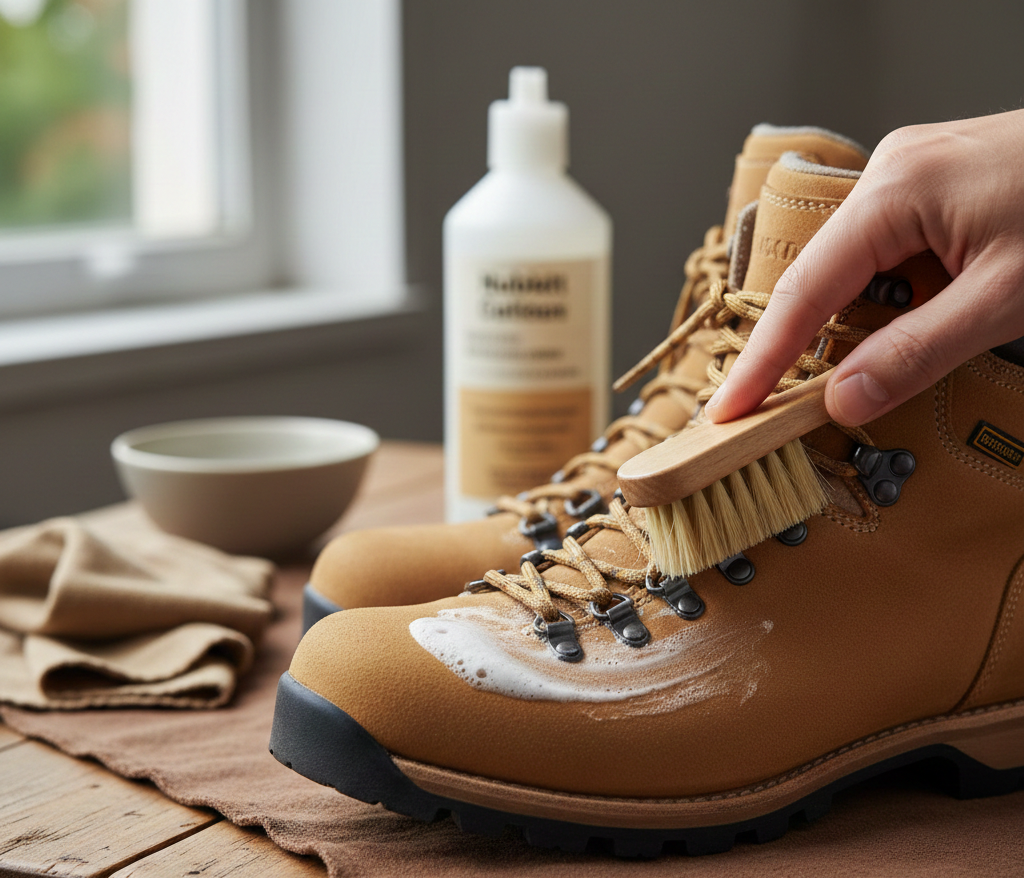
Brushing is an essential leather care action for a few specific leathers, such as suede and nubuck leather care approaches. Smooth leathers like full-grain, top-grain, aniline leathers do not require brushing as part of routine leather care.
For suede and nubuck leather care, use a dedicated soft-bristle brush. Brush in one consistent direction to lift the fibres and maintain a uniform, velvety nap. Brushing also removes dry dust and surface debris that wiping alone cannot address, as pressing a cloth onto textured leather compresses the fibres rather than lifting them. The soft-bristle brush included in most leather care kits is suitable for this purpose.
At Wasama, all the products belong to full or top-grain leather hides and have no product made with nubuck or suede leather. However, we ensure each of the individuals has overall knowledge regarding the way to use different elements of the leather kit in maintaining the good condition of leather products.
8. Using Leather Care Kit
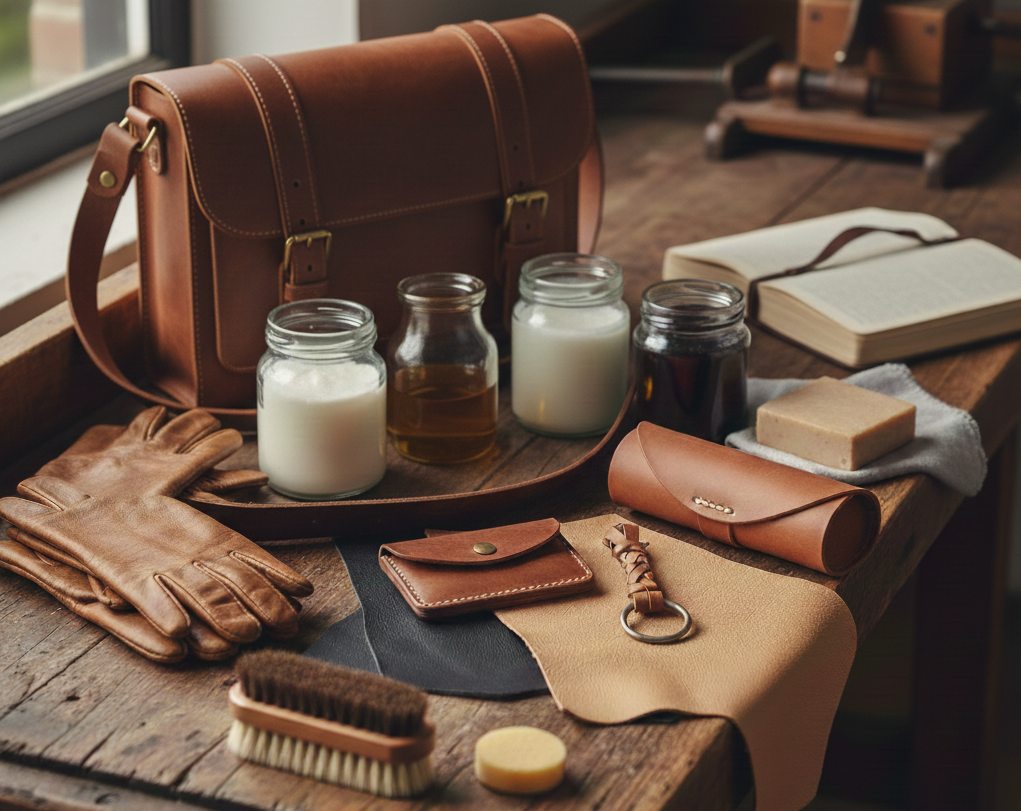
A full set of leather care kit is to be used in cleaning and keeping your real leather products in good condition. This kit mainly contains pH-safe cleaner, conditioner, microfiber cloth, and soft-bristle brush.
The pH-safe cleaner ensures the texture of the real leather products is kept intact and safe from any damage during cleaning. The condition is often used to smooth the cracked surface, and a microfiber cloth is used for wiping and dusting the leather products. Soft bristle brush is often used for nubuck or suede leather care, as they show texture, which creates space for dust accumulation that cannot be easily removed by wiping with a cloth.
Leather Care in the UK: Climate Considerations
The British climate presents specific challenges for leather care that are worth understanding. The UK’s combination of regular rainfall, high ambient humidity, cold winters, and low winter sunlight creates conditions that differ significantly from drier or warmer climates.
Damp and Rainy Weather
The UK’s frequent rain means leather bags, shoes, and jackets are regularly exposed to moisture. After any wet-weather use, blot the surface dry immediately and allow the item to air dry indoors at room temperature and never near a radiator or heater for leather care. Apply a water-repellent leather protector spray before the rainy season begins, typically around October, rather than after exposure has already occurred. This is particularly important for aniline leather care and suede leather care, as both are highly vulnerable to water marks and staining.
Salt Damage in Winter
Road salt and grit used on UK pavements and roads during winter are a significant threat to leather footwear and the lower panels of leather bags. Salt draws moisture out of the leather and leaves white residue stains. If salt contact occurs, wipe the affected area with a lightly damp cloth as soon as possible as part of leather care and allow it to dry naturally. Do not wait as salt staining becomes increasingly difficult to remove the longer it sits on the surface.
Indoor Humidity and Storage
UK homes, particularly older properties can have high ambient humidity, especially in winter when ventilation is reduced. Avoid storing leather in areas with poor airflow such as under-stair cupboards, damp basements, or unventilated wardrobes. If condensation is common where leather is stored, place a silica gel sachet near (not in contact with) the leather to absorb excess moisture from the surrounding air.
Low Sunlight in Winter
Whilst the UK’s limited winter sun reduces the risk of UV fading, it also means leather dries more slowly after getting wet. Allow additional drying time during colder months and ensure leather is fully dry before returning it to storage to prevent mould development.
Specific Care Strategies for 9 Different Types of Leather
All real leather products may not be created from the same type of leather, as hides are taken from different layers of the skin and processed in various ways to create the final product. Apart from following the above common leather care strategies, a few care approaches to be followed based on the different types of leather used in creating the products are as follows:
1. Full or top-grain Leather
Products created using full or top-grain leather are often highly durable and resistant to damage. All the products from Wasama, including leather wallets, leather bags, and messenger bags, are created using this type of leather.
One of the specific leather care approaches to be followed in maintaining products made from full or top-grain leather is always using a soft cloth in cleaning the items and avoiding brushes or any liquid conditioner. You need to use gel or cream conditioner after every few months and not regularly to maintain its soft texture.
2. Aniline Leather
Leather items created using aniline leather require extra precaution in managing their texture and quality. This leather has no protective finish compared to full or top-grain leather, making it highly absorbent to any water or oils. Thus, the blotting technique is to be used instead of wiping in cleaning any spills for aniline leather care, as it helps to avoid absorption into the pores.
In caring for aniline leather, exposure to sunlight and humidity is strictly restricted, as it would lead to fading and damage to the leather. The care for aniline leather requires storing the products in breathable bags, unlike full or top-grain leather items, which can be easily stored in dustproof bags to lower the overall risk of damage.
3. Nubuck Leather
The nubuck leather care specifically involves never using any conditioning or oiling the surface, as it would darken the upper part permanently. The matted and smooth surface needs to be brushed gently to maintain the velvety texture and avoid raised fibres.
Special nubuck-safe sprays, which do not contain any silicon particles, are to be used for nubuck leather care as they create a protective barrier between water and dirt. This leads the coating and fibres never to be clogged, leading to retaining the matte finish. The matte finish could otherwise be destroyed with the use of silicon spray that creates a shiny plastic coat over the matte finish. Also, nubuck leather care needs occasional brushing as it has slightly stronger fibres, which help it maintain its shape of the fibres.
4. Suede Leather
The suede leather care is slightly different from nubuck leather care, even though they look similar. Suede leather care approach involves regular brushing to lift the fibres in the same direction. This creates a uniform look and avoids patchy surfaces. Suede leather care needs regular brushing as it has softer fibres compared to nubuck leather.
Unlike nubuck leather, suede leather care needs the use of support in keeping the items in shape, as otherwise the product’s shape is crushed and gets permanently flattened.
5. Split Leather
Split leather care is different from suede or nubuck leather care, as the surface is more absorbent and plain with no fibrous texture to follow. The care for this kind of leather is somewhat similar to full or top-grain and aniline leather, as it needs to be kept away from water. Since split leather’s pores are wider, water penetration may develop stains and long-term fibre weakening, leading to its damage.
This leather needs frequent conditioning, unlike full or top-grain and aniline leather, as it naturally has less oil, which makes it prone to cracking. The condition helps in supporting the softness of the fibres to maintain the split leather products’ effective condition.
6. Patent Leather
In comparison to nubuck or suede leather care approaches, the activity for managing patent leather products is slightly different, as it does not need brushing but wiping to keep the surface clean. The glassy surface makes the patent leather product need to be handled with more care to avoid any scratching on the shiny surface.
Unlike top-grain and aniline leather, this type of leather products do not need any conditioning as the pores are blocked by a shiny coating. Thus, applying the condition would only make the surface sticky and create dull spots, which would damage the outlook of the product.
7. Bycast Leather
The maintenance of bycast leather products is way easier than that of top-grain, suede or nubuck leather. This type of leather product needs mild soap solutions to clear the dirt and any spots, as it has a plastic coating. Unlike caring for aniline leather, this type of leather does not need any conditioning as it is protected by a dense coating.
8. Bonded Leather
Bonded leather care is different from nubuck or suede leather care or caring for any other types of leather products, as it is made by glueing different leather pieces. Thus, this type of leather product is to be strictly kept away from the heat, as otherwise it may cause loosening of the binder. Avoid all conditioners and oils as they may create a dirty-looking film when they get in through the cracks of the attached leather pieces.
9. Latigo Leather
Unlike the suede or nubuck leather care or caring for aniline leather products, latigo leather items require simple care. Wipe the surface with any soft cloth regularly, as it has a semi-waxy finish, and dust may settle on the surface to make it look dull. Latigo leather has oils deep in its fibres, which makes it sparingly needs conditioning to maintain softness.
The latigo leather products need to be stored in a flat or hung manner, as it has a dense fibre structure which may be damaged if kept in a sharp, folded manner. In the flat or hung stage, the leather looks smooth.
Leather Care Practices for Different Types of Leather Products
| Wasama Product | Daily Care | Deep Maintenance | Storage |
| Wallets | Avoid overstuffing; wipe with a dry cloth. | Condition smooth leather wallets every 3–4 months; avoid liquid on suede/nubuck wallets. | Store flat; keep away from direct heat. |
| Card Holders | Keep away from coins or abrasive surfaces. | For aniline/nubuck card holders, maintain the nap gently with a brush. | Store in a cotton pouch, not plastic. |
| Belts | Rotate use to prevent over-stretching. | Condition only smooth leather belts. Avoid applying oils to suede belts. | Hang vertically; avoid bending. |
| Bags & Crossbodies | Empty after use; dust regularly. | Light conditioning for smooth leathers; brushing for suede/nubuck surfaces. | Store upright using stuffing to retain shape. |
| Footwear | Air out after use; avoid wet floors. | Use a suede/nubuck brush or leather-friendly cream, depending on the material. | Use shoe trees; keep away from moisture. |
| Leather Jackets | Air after wearing; avoid rain exposure. | Professional cleaning yearly; careful spot cleaning. | Store on a padded hanger with breathing space. |
Conclusion
Leather care is about preserving structure, texture, and character – not just appearance. With the right habits, whether using a thoughtful leather care kit, learning how to care for leather clothing, or practising specific techniques such as nubuck leather care, aniline leather care, caring for aniline leather, and suede leather care, your leather pieces will age gracefully and last longer. Each type of leather responds differently, and choosing the correct approach ensures durability, comfort, and beauty over time.
If you value real leather that develops a rich patina and improves with use, explore Wasama’s collection of authentic leather wallets, bags, belts, and everyday carry essentials.
8 Major Leather Care Tips from Wasama -FAQs
- How do you take care of leather?
Leather care involves gentle cleaning, avoiding moisture and direct heat, occasional conditioning for smooth leathers, and proper storage in breathable bags to maintain softness and durability.
- What is best for leather care?
A good leather care kit with a mild cleaner, conditioner, and soft cloth helps maintain flexibility, remove light dirt, and prevent drying without damaging the leather surface.
- Should I moisturise leather?
Yes, moisturise smooth leather occasionally. However, avoid suede leather care and nubuck leather care using creams—those materials require brushing and protective sprays instead of hydration.
- What is a 4-way leather conditioner?
A 4-way conditioner cleans, conditions, softens, and preserves leather. It is suitable for top-grain and full-grain leathers, but not recommended for aniline leather care or suede.
- Can I use olive oil as a leather conditioner?
No. Olive oil oversaturates fibres, causes dark spots, and weakens structure. Always use conditioners specifically designed for leather care.
- What should you not use on leather?
Avoid alcohol wipes, detergents, and oils like coconut or olive oil. These damage fibres and finishes, especially for aniline leather and suede.
- How do I care for suede leather?
Suede leather care requires brushing to lift fibres, keeping it dry, and using suede-safe protective sprays. Never condition suede with creams or oils.
- How do I care for nubuck leather?
Nubuck leather care involves regular brushing, avoiding oils, and applying breathable protective sprays. Keep nubuck away from water and stains.
- How do I care for aniline leather?
Aniline leather care requires gentle handling—store away from sunlight, avoid moisture, and condition lightly only when dryness is visible.
- How do you care for leather clothing?
You need to avoid folding, store on padded hangers, air occasionally, and clean only with leather-safe products or professional services.


